Can we align to our state's healthy school canteen guidelines?+
Yes — we support every state framework: NSW Healthy School Canteen Strategy, VIC School Canteens & Other School Food Services Policy, QLD Smart Choices, WA Healthy Food & Drink Policy, SA Right Bite, ACT National Healthy School Canteens Guidelines and TAS Move Well Eat Well. Your product mix is built to green/amber/red targets.
Can we exclude sugary drinks entirely?+
Yes. You choose categories to include or exclude. Many schools go 100% no-sugar drinks, with water, plain milk, low-sugar flavoured milk and 99% juices only.
Where can the machine be installed?+
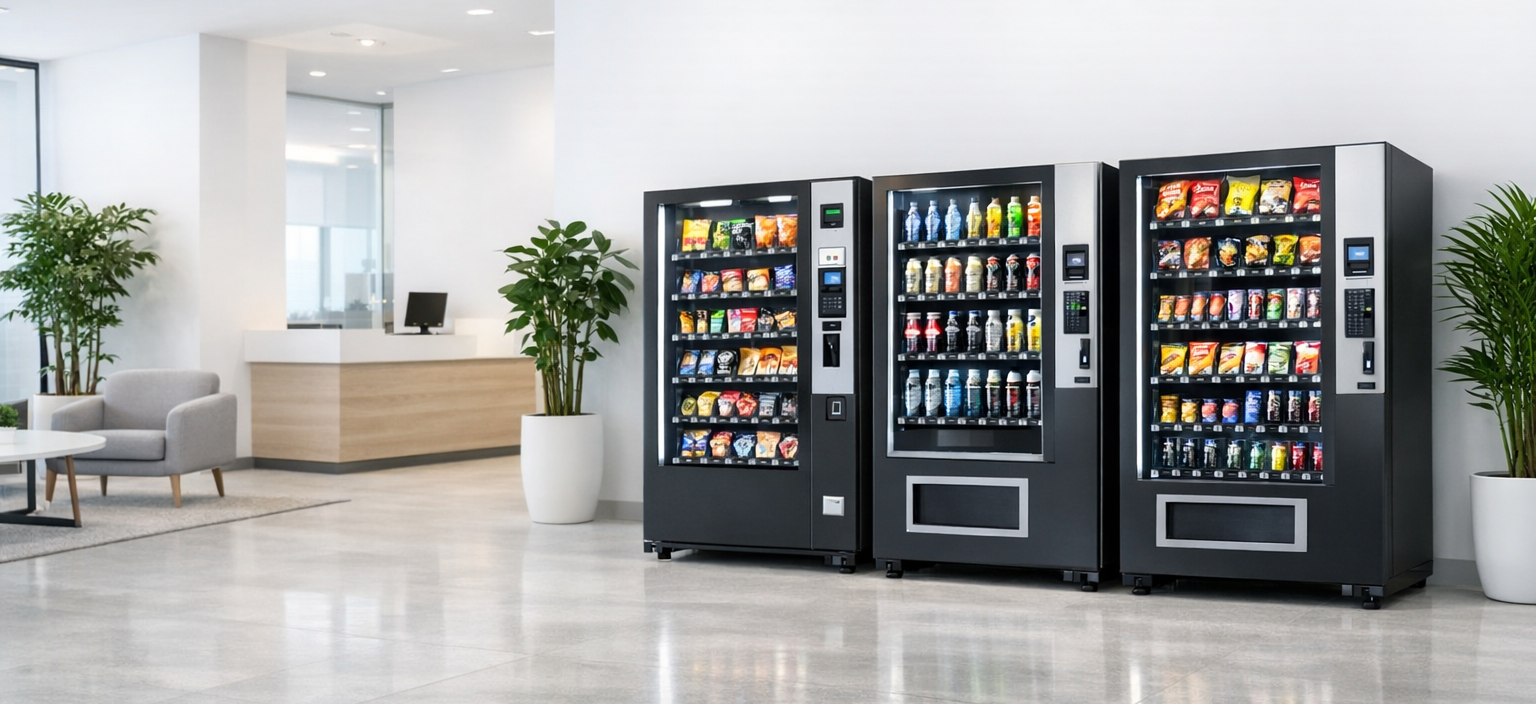
Staff rooms, senior common rooms, admin blocks, sports pavilions, aquatic centres and boarding houses. Junior-school placements are handled case-by-case with the principal.
Is cashless payment safe and appropriate for students?+
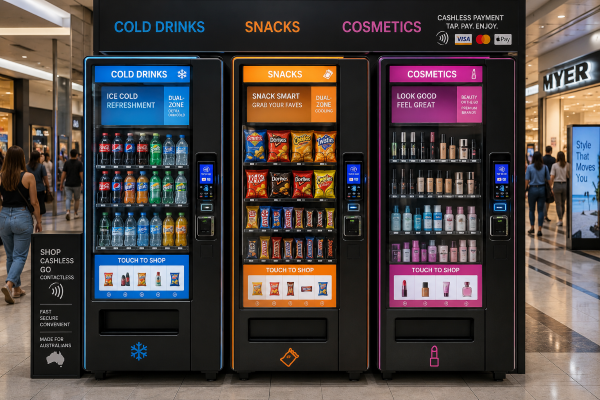
Machines accept tap-to-pay contactless card, Apple Pay and Google Pay only — no cash box on site, no way to break in for coins. This matches most schools' cashless canteen and library systems.
Do you cover independent, Catholic, public and boarding schools?+
Yes — we service all school sectors across every Australian state and territory. Compliance requirements (child-safe registration, WWCC clearance for on-site staff) are handled the same way.
What about universities and TAFE campuses?+
Full higher-education coverage — Group of Eight universities, regional universities, TAFE campuses, private colleges and student accommodation. Product mix is usually broader (energy drinks, hot food snacks, meal-replacement bars) than for schools.
How does term-time and school-holiday scheduling work?+
Restocking cadence is tuned to your term calendar — reduced or paused during term breaks and long holidays, ramped up in the first two weeks of a new term.
Can students with disabilities use the machine?+
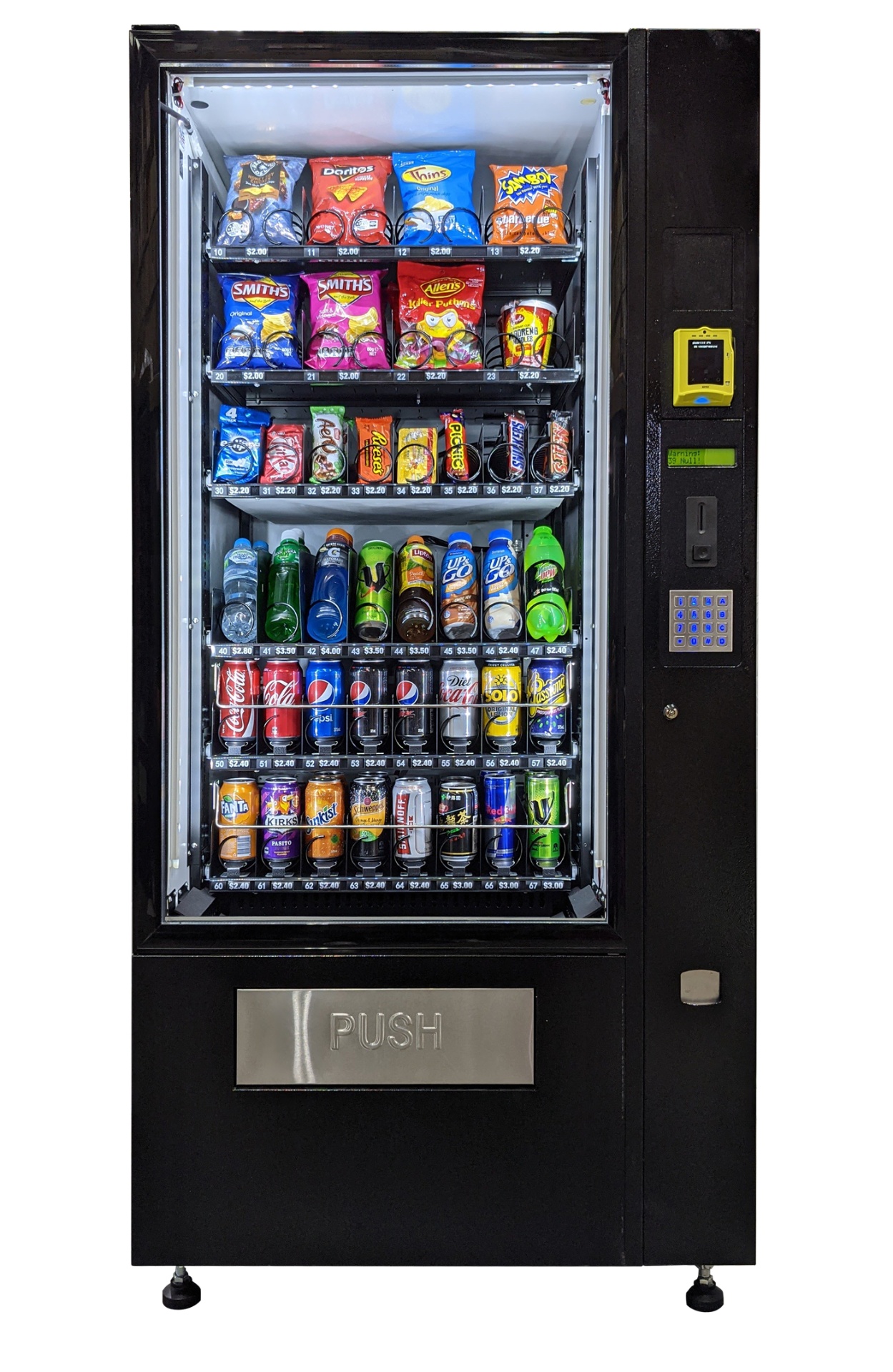
Yes — machines are DDA-compliant with accessible-height controls and clear tactile buttons. Product plans can include allergen-aware SKUs (nut-free, gluten-free).
Is there any advertising or branding on the machine?+
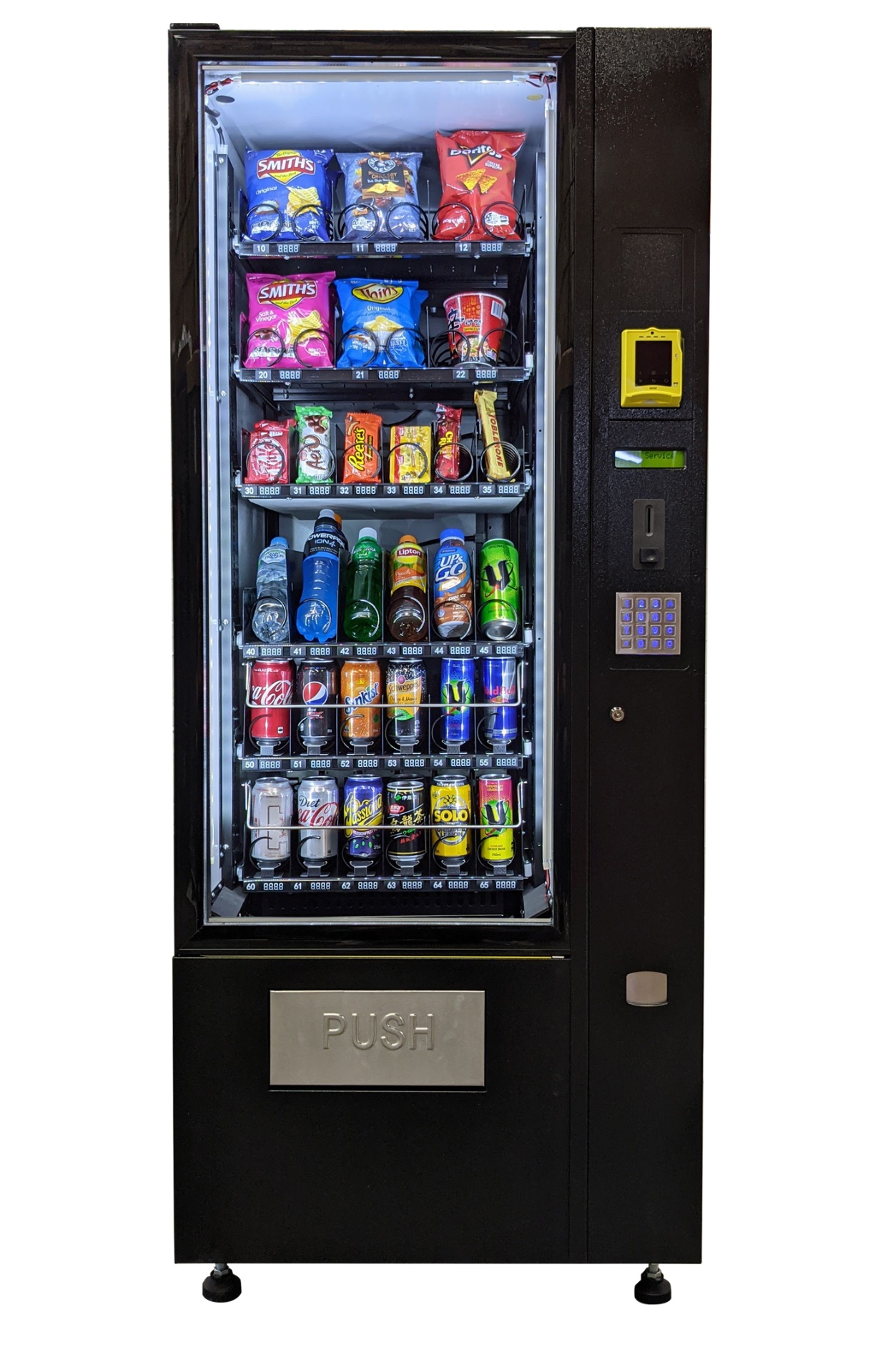
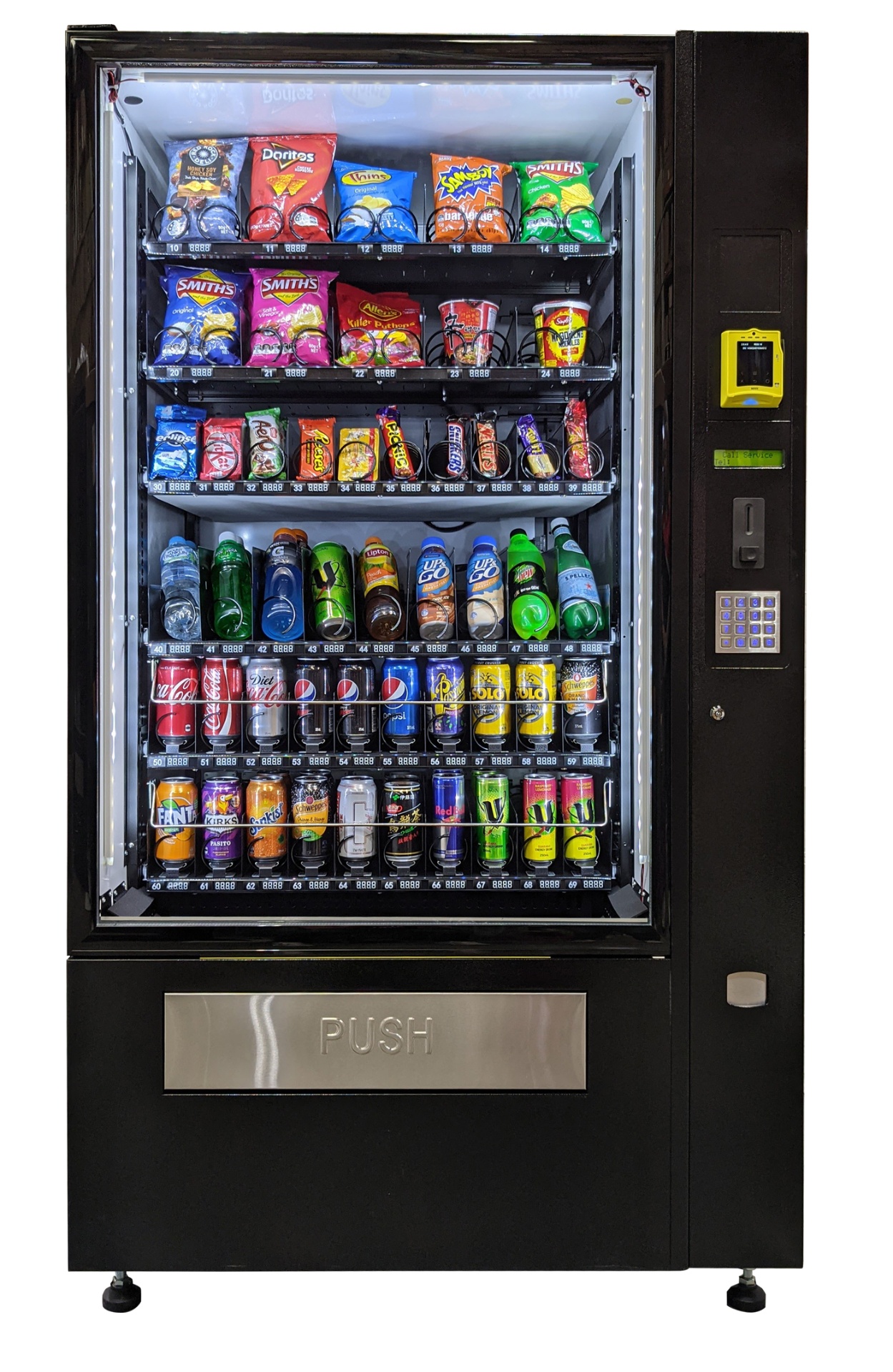
Standard machines are unbranded (matte black finish, no external product advertising panels). For schools that prefer, we can add a custom school-branded wrap at no charge.
How is theft, vandalism or after-hours access handled?+
Machines are reinforced steel, tamper-resistant, and telemetry-monitored — attempted intrusion triggers an alert. In seven+ years of school installs, physical break-ins are vanishingly rare thanks to the no-cash design.
Can P&C or the school retain revenue?+
For higher-traffic sites (boarding schools, large secondary campuses, universities) we offer negotiated revenue share to the school or P&C. Ask when you request.
Can you install a vending machine up one or two flights of stairs?+
Yes. A snack or drink machine is 250–300kg empty and our crew brings a powered stair-climber plus two to three installers. We remove the front door on tight landings, protect balustrades, and hand-turn each landing. Most 1–2 storey stair installs across NSW, VIC and QLD are completed the same morning. See our stair-climb install page for the full method.
What if there's no lift and no viable stair path — can you crane a machine through a first-floor window?+
Yes. When stairs aren't practical (tight spiral, fire-only, or the machine won't clear a landing) we book a truck-mounted hi-ab crane and lift the unit through a first-storey window. We coordinate the traffic-management permit, spotter, and window removal/reinstall so your building manager only signs off the date.
The site has new turf, pavers or freshly landscaped gardens — how do you protect them?+
We ground-protect with reused lexan machine fronts laid end-to-end and pallet-jack each machine across the mat. On a recent Tomago electrical factory install, two machines were moved 150m across new grass to the staff lunchroom this way — two crew, two hours, zero damage. Same method works for softscaping, exposed aggregate and epoxy floors.
What access details should we confirm before install day?+
Door width (min 820mm ideal), floor level and rating, stair count and landing turns, whether a lift exists and its internal dimensions, distance from loading zone, any bollards or garden beds in the path, and after-hours access. Send photos with your request and we'll pre-plan the exact method — stair-climber, hi-ab or protected carry.
How do you decide the first product mix (planogram) before install?+
We build a starter planogram from what actually sells at similar sites in your industry and postcode — best-selling drinks, snacks and, on combi units, fresh/frozen lines. It's a 4–6 week baseline. Once remote monitoring has real sales data we rotate slow movers out and give proven sellers extra selections and facings, so the mix keeps improving without you asking.
What testing do you do before handing the machine over to staff?+
Every vend motor is cycled, every drop sensor in the delivery bin is confirmed triggering, and the card reader is transaction-tested with a live tap-to-pay. We also test refund flow, price display, and telemetry heartbeat back to our operations centre. If anything hesitates we swap the part before your team ever sees the machine.
How is refrigeration checked at install?+
We pull the deck and inspect the temperature probe, compressor fan and internal cabinet circulation fan under load. A squeal on either fan means bearings are on the way out and we replace the motor before install rather than after a callout. Air-filter cassettes (where fitted) are removed, blown out or replaced so dust doesn't cook the deck in month three.
Does the machine arrive looking new?+
Yes. Every machine gets a full detail inside and out before it leaves our workshop — cabinet wipe-down, spiral and shelf clean, tray and delivery-bin scrub. Glass is polished inside and out so products look crystal clear (nobody buys from a dirty-looking machine), and older units get an exterior polish so they present as-new on day one.
How quickly can the product mix change once you see the sales data?+
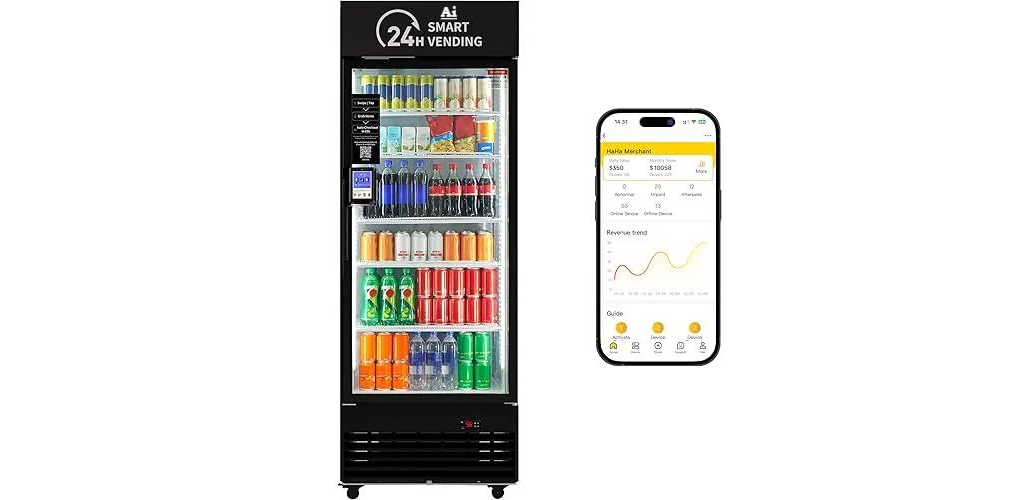
Remote monitoring reports sales by selection in real time. We usually action the first rotation at the 4-week mark: slow movers pulled, top sellers doubled up across more selections. Staff can also request swaps directly — a QR code on the machine goes straight to our operations team.
What happens if the card reader ever fails?+
Telemetry flags a card-reader fault the moment it stops handshaking. We dispatch a swap unit — usually next business day — and reconcile any partial transactions automatically. Your team never has to troubleshoot a reader on the floor.