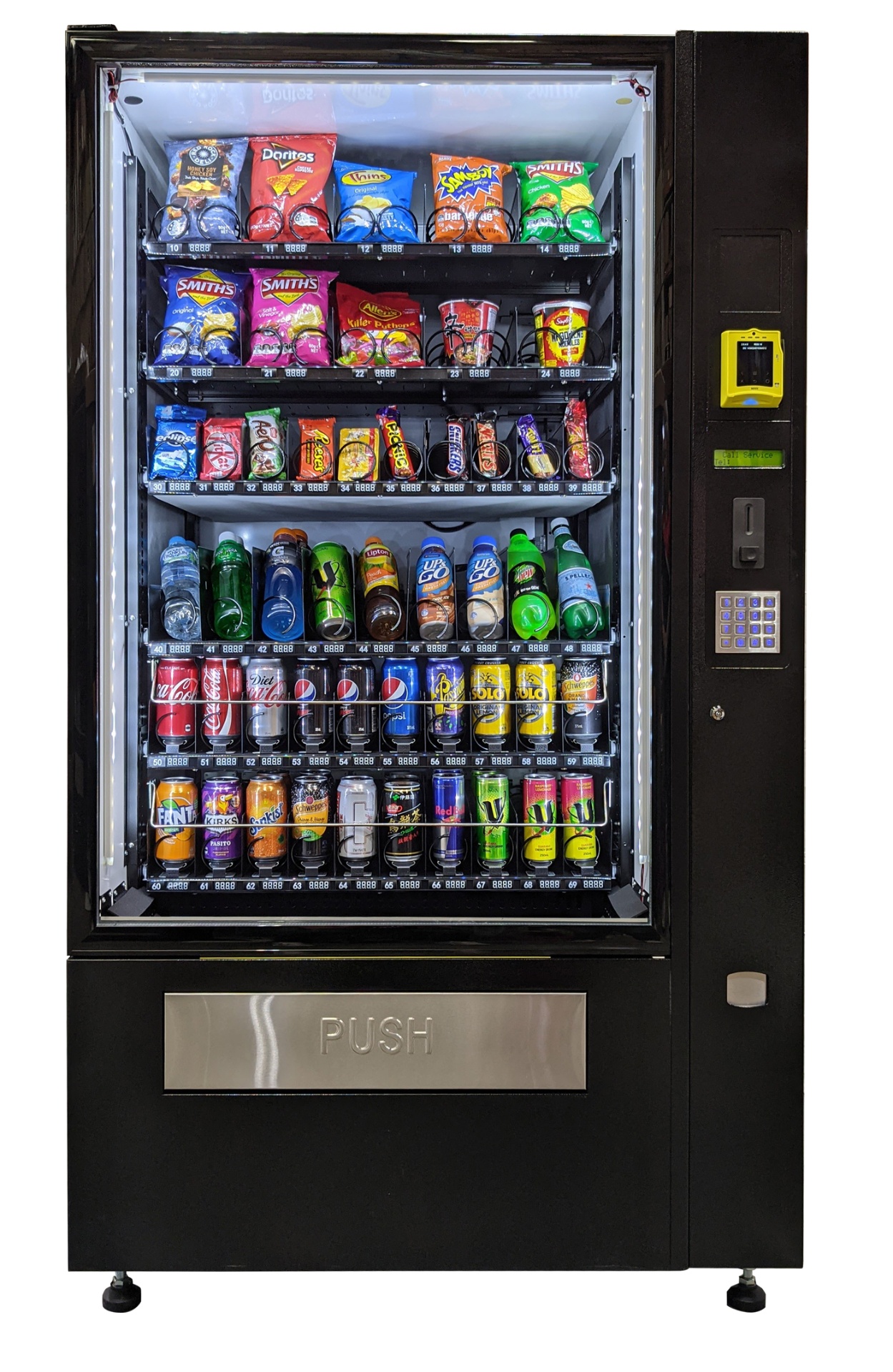
A combination vending machine — snacks and cold drinks in the same cabinet — is the default vending format for Australian warehouses, distribution centres, and industrial sites. One machine, one power outlet, one service visit, both product categories covered. For a warehouse crib room, that footprint efficiency matters more than the format matters in an office lobby. This guide covers how combination machines are specified for warehouse use in 2026, why free placement almost always fits distribution sites, what capacity and shift patterns to plan for, and where combo machines fall short (so a second unit or a smart fridge is added).
Why combination machines suit warehouses
A warehouse crib room is rarely large, rarely near a shop, and rarely staffed with anyone whose job it is to manage a kitchen. That combination of constraints — floor space, isolation, no in-house catering — is exactly what combination machines were designed for. Both snack and drink categories in one cabinet means one delivery, one power outlet, one service visit, one cashless reader, and one point of contact when something needs attention. On a distribution centre with three shifts, that operational simplicity is worth more than a marginal capacity gain from separate units.
Real benefits for a warehouse or DC
Shift-friendly amenity
Warehouse shifts often run outside cafe hours — early starts, night shifts, weekends. A combo machine works around the clock and never closes for a break. For 24/7 operations that isn't a nice-to-have; it's the entire amenity offer.
One footprint, both categories
Two separate machines take twice the floor space, need two outlets, and produce two service visits. A combo lands in a corner of the crib room, plugs into one outlet, and covers both categories.
Cashless, no cash handling
Warehouses often don't want cash on site — it creates float management, banking, and theft risk. A tap-to-pay combo machine takes that off the table entirely.
Product mix tuned to warehouse reality
Warehouse ranges skew toward caffeine (energy drinks, cold coffee), high-calorie snacks that get someone through a physical shift, and cold water in summer. The operator tunes the mix based on the site's actual sales data — offices and warehouses end up with very different combos even from the same machine.
Why free placement almost always fits warehouses
Warehouses hit the free placement threshold more easily than most site types. A permanent crew of 25+ people running physical shifts consumes vending at 2–3x the rate of an equivalent office headcount. Add night shift and weekend coverage and total daily transactions comfortably exceed the operator's service floor. That is why free placement is the dominant model in Australian warehousing — the maths works with margin to spare.
Capacity planning: one combo, or two?
A standard combination machine holds 30–45 snack selections and 8–12 drink selections. On typical Australian warehouse consumption, one combo services 30–60 permanent crew comfortably on a fortnightly restock, or up to about 100 crew on weekly restock. Above that, sites usually add a second unit — either another combo or a dedicated drinks machine — rather than push service frequency higher.
Signals that a site has outgrown one combo: refrigerated section runs empty before the next service, one or two selections consistently sold out, staff request specific missing items week after week. The operator monitors all three via telemetry and flags upsizing before it becomes a complaint.
24/7 shift considerations
Sites running around-the-clock shifts get a slightly different service pattern. Restocks are booked outside peak shift changeovers to avoid crib-room congestion. Machines run on uninterruptible power on sites with generator backup. Product ranges shift toward night-shift needs — more caffeine, more grab-and-go hot food options via smart-fridge attachments where available. Service response for breakdowns is prioritised on 24/7 sites because a broken combo at 2 AM is a real amenity gap, not a next-day problem.
Where a combination machine stops being enough
- Sites with 100+ permanent crew: add a second unit or split into snack + drink.
- Sites that want fresh food (sandwiches, salads, ready meals): pair the combo with a smart fridge.
- Sites that want serious coffee: pair the combo with a bean-to-cup unit.
- Sites with PPE dispensing needs: add a dedicated PPE vending machine — a combo won't cover it.
Installation in a working warehouse
Warehouse installs are usually straightforward: forklift or pallet-jack access to the crib room, one 240V outlet, and a solid floor. Operators bring their own trolleys, ramps, and load-restraint straps. Installs are booked around shift patterns — often before day-shift start or between crossover windows — so the crib room isn't occupied during placement.
Next step
For a warehouse or distribution centre, the fastest path is the suitability check. It confirms free placement eligibility, machine sizing, and install window in one pass. Multi-site operators can request a single rollout schedule covering every location.
One-minute form. Single- or multi-site rollouts supported.
DavidB, VMA
Vending operator & technician
DavidB has 20+ years of hands-on experience across the Australian vending industry. He has configured, installed, removed and transported thousands of machines — from full site rollouts to the quick "pick-up-and-move" jobs that keep a site happy. Starting in repairs, he learned from some of the industry's longest-serving technicians, covering everything from lock changes and fridge decks to vend motors, control boards, coin mechs and note readers. He was also among the earliest installers of Australia's first telemetry systems, helping shape what operators actually need in the back end: product imaging, stock sales, re-ordering, route planning and even catching thieving fillers who did not know the machine was monitored. Later, he moved into supplier roles across note readers, coin acceptors, credit card readers and other cashless acceptance methods including QR code and RFID systems for specialised vending such as PPE machines.