Free tool
How much could your workplace earn from a free vending machine?
An honest estimator built on real Australian vending economics — including the price uplift when commission is requested, and the ~$200/week turnover threshold a site needs to be viable.
Interactive estimator
Enter your site details
Your site
Lifted to roughly retail parity to cover 10% commission.
Estimated performance
Weekly turnover
$675
Monthly turnover
$2,923
Quarterly turnover
$8,775
Your commission
$878/ quarter
≈ $293 / month, paid to the business quarterly.
✓ Commercially viable site
A vending machine typically needs ~$200/week turnover to be viable. Your estimate is $675/week. You'd qualify for a free install and commission payments.
Ready to see the real numbers?
Get a free, no-obligation quote for your site
We'll recommend the right combination machine mix (drinks + snacks) for your headcount and pricing model.
How pricing changes with commission
Vending has traditionally been priced around 30% below takeaway, service-station and convenience-store retail — that's the whole reason staff use the machine instead of walking to the shop. On a non-commission site a can of Coca-Cola is typically $2.49 (a servo would be $3.50+) and a chocolate bar around $2.20. On a 10% commission site those move to roughly $3.60 for the can and $2.60 for the chocolate — lifted toward retail parity to fund the site commission on top of delivery, restocking, refrigeration power and card fees. Many workplaces keep the below-retail non-commission pricing on purpose so staff actually use the machine. It's a real trade-off and this calculator makes it visible.
Smarter than commission
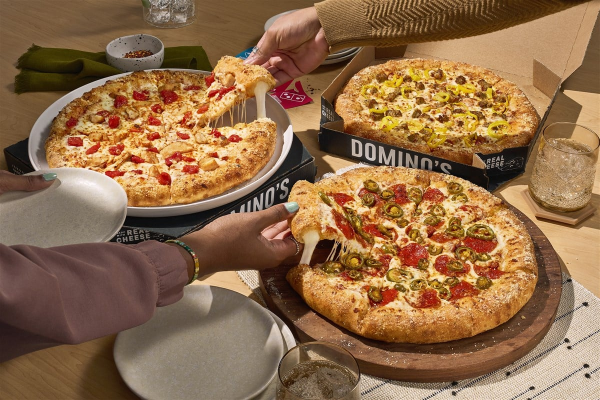
The "pizza party" play — what the sharp CEOs do
Here's a pattern we see with the more commercially-minded CEOs and site managers. Instead of asking for a 10% quarterly commission — which forces the operator to lift a can of Coke from $2.49 to $3.60+ and a chocolate bar from $2.20 to $2.60+ — they skip the commission and ask us to run a staff pizza party once or twice a year instead.
We phone Domino's or the local pizzeria, pay on our card, and 20 large pizzas plus garlic breads get delivered hot and fresh to the lunchroom. No admin, no invoice for the site to process, no paperwork. Staff get an actual event they remember — the commission cheque, split across a whole business, usually wouldn't buy the same experience.
The bigger win is quiet: prices in the machine stay at their traditional ~30% below retail level, so staff use it more often. Higher usage = healthier site = the machine stays profitable and reliable for the long run. The site manager who wanted commission to fund a Christmas party often ends up with less to show for it than the CEO who took the pizza deal.
Ask us on the call — we're happy to structure it either way, and we'll be honest about which works better at your site's usage level.
Full transparency
What the operator actually pays for
It's easy to forget: your site is getting a free machine, free installation and full vending service — no hire fees, no maintenance bills, no restocking. The operator is a service business just like yours, and the weekly sales have to cover every real, ongoing overhead before any commission is possible. That's why sites need to clear the ~$200/week viability line, and why commission requires a price uplift. Here's the honest breakdown:
Stock cost of goods
Wholesale drinks, snacks, confectionery — the single biggest line item, typically 45–55% of retail.
Filler labour @ ~$30/hr
A route driver restocks, rotates date-sensitive stock, cleans the machine and clears any jams — every visit.
Vehicle running costs
Fuel, servicing, tyres, rego, comprehensive insurance — the delivery van is on the road 5–6 days a week.
CBD tolls & parking
Sydney/Melbourne/Brisbane CBD sites add tolls, paid parking and lost time sitting in traffic on every restock.
Public & product liability insurance
~$400 per annum, per operator — covers you as the host site as well as us.
Machine, telemetry & card reader fees
The machine itself, live telemetry SIM & software, tap-to-pay merchant fees (~1.5% of every sale), plus the card reader rental (~$20+GST/month per machine) and refrigeration power.
Cashless payment benefits
No coin jams, no staff complaints about wrong change or missed products, and faster sales mean less stock going out of date on slow-moving lines.
Service technicians
On-call refrigeration and coin/card-reader techs — attend within 24–48 hours, no charge to the site.
Major repairs & refrigeration
A fully reconditioned refrigeration system can run ~$1,500 plus ~$300 in technician labour — absorbed by the operator, never invoiced to the site.
Waste, spoilage & shrinkage
Expired stock is pulled and written off. On low-turnover sites this alone can wipe out any commission margin.
None of that is your problem — it's ours. We only mention it so the numbers above make sense: on a healthy site, the math works and there's room for commission on top. On a quiet site, it doesn't, and being upfront about that is why we last with clients.
Frequently asked
How does a free vending machine work in Australia?
A vending operator installs, stocks, services and insures a commercial machine at your workplace at zero cost. Their return comes from the retail margin on every drink, snack, coffee and combo item staff buy — usually via tap-to-pay. You supply floor space and a standard power point. There is no lease, no minimum sales guarantee, no invoice from us, and no lock-in contract.
Free vs paid vending machines — which pays off for our site?
Free placement wins for the vast majority of Australian workplaces because you avoid the $6,000–$18,000 machine capex, the ~$180–$400/month running costs and the labour to restock. Paid ownership only pulls ahead once you have 100+ staff on-site all day, someone rostered to restock, and you specifically want to keep the retail margin. Use the calculator above to see the crossover for your headcount.
How does the calculator estimate earnings?
It multiplies your on-site headcount by an industry-standard vend rate (0.5 items per person per day for all-day desk/floor staff, 0.15 for transient/rep staff), applies the average price per vend (which shifts up when commission is requested, because prices must lift toward retail parity), then multiplies by your operating days and the commission %. It's built on real Australian pricing — the same numbers our route drivers see every week.
How much commission does a vending machine pay in Australia?
Most Australian free-vending programs pay 10% of net sales, calculated and paid quarterly. Larger sites (100+ staff who remain onsite all day) can sometimes negotiate 12–15%. Sites under ~70 daily users usually receive the machine free but with no commission because the price uplift required to fund commission would suppress sales.
What turnover does a vending machine need to be viable?
A large workplace vending machine needs to turn over at least $200 per week (roughly $800/month) to be commercially viable. Below that threshold the operator can still leave the machine in place, but there won't usually be a commission payment — the sales fund restocking, servicing and depreciation only.
Why do prices go up if we ask for commission?
Vending has traditionally been priced around 30% below takeaway / servo / convenience-store retail — that's the reason staff use the machine instead of walking to the shop. When a site asks for commission, the operator has to lift prices toward retail parity to cover it: a can of Coke that's $2.49 in a non-commission machine typically becomes $3.60–$4.00 on a commission site (a servo would charge similar), and a chocolate bar moves from around $2.20 to about $2.60. Many sites keep the lower non-commission pricing on purpose so staff actually use the machine.
Is the commission paid to the business or to individual staff?
The commission is paid to the business (the ABN that hosts the machine). Many workplaces route it back into social club funds, Christmas parties, or team lunches. That's usually a more welcome perk than the small dollar amount would be if divided across payroll.
How are the estimates calculated?
We use industry-average usage rates: staff who remain onsite all day buy roughly 0.5 items per person per working day; sales reps, drivers or transient staff are closer to 0.15. That's multiplied by your average price per vend (which changes if commission is requested), your operating days, and your commission %. Real results vary with product range, seasonality and whether there's a café or 7-Eleven next door.
What do credit card readers cost the vending operator?
Cashless card readers are not free. The operator typically pays around $20 + GST per month, per machine, just to rent the reader and keep tap-to-pay live. On top of that there's a merchant fee of roughly 1.5% on every sale. The trade-off is worth it: no coin jams, no staff complaints about wrong change or missed products, faster checkout queues, and sales volumes are higher because people rarely carry coins anymore.
Why do machines sometimes run out of stock or have out-of-date products?
Stock-outs and spoilage are real costs for the operator. If a line sells slowly, products can pass their best-before date and have to be written off. If the route driver is delayed by traffic, tolls or parking in the CBD, a machine can sit empty for a day. Cashless readers actually help here — faster sales mean stock turns over quickly instead of ageing on the shelf, and telemetry tells the operator exactly what to refill and when.
How much does refrigeration breakdown and routine maintenance cost?
Keeping a vending machine reliable is expensive. A full refrigeration system recondition can run about $1,500 for the parts plus roughly $300 in technician labour, and that's absorbed by the operator, never invoiced to the site. On top of that, a proper preventative maintenance program — cleaning, health checks, compressor checks, calibration and sanitation — can easily cost several hundred dollars per quarter, per machine. That's what keeps vend quality, temperature and hygiene compliant so the machine stays profitable for the long run.
Why do big corporate sites with commission sometimes need multiple new machines?
Large corporates often insist on a commission revenue share and brand-new equipment. To cater for that properly, the operator might need a full lineup: a coffee machine, a full drink machine, a full snack machine, and a large smart fridge for fresh food. Financing that new equipment can mean loans with weekly repayments of $80 or more, per machine. Those repayments, plus insurance, fuel, labour, stock and maintenance, are why the operator needs a healthy weekly turnover before any commission is realistic — and why prices have to lift toward retail parity when commission is on the table.
Related guides
Free vs paid, office coverage, and combo-machine deep dives
Read the pillar guides behind the numbers in this calculator — how the free model works, how offices compare their three ownership options, free office coffee, and combination machines for warehouse shift workers.
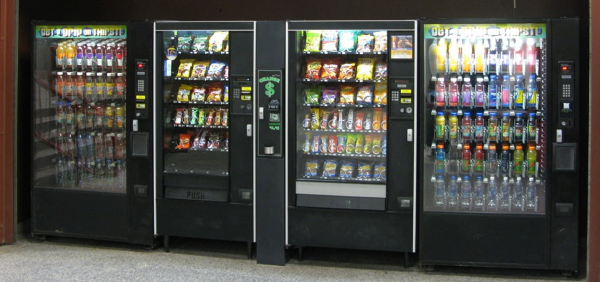
Free Vending Machines Australia — the complete 2026 guide
How the $0 placement model works, who qualifies, machine types and the honest economics behind free vending.
Read the guide →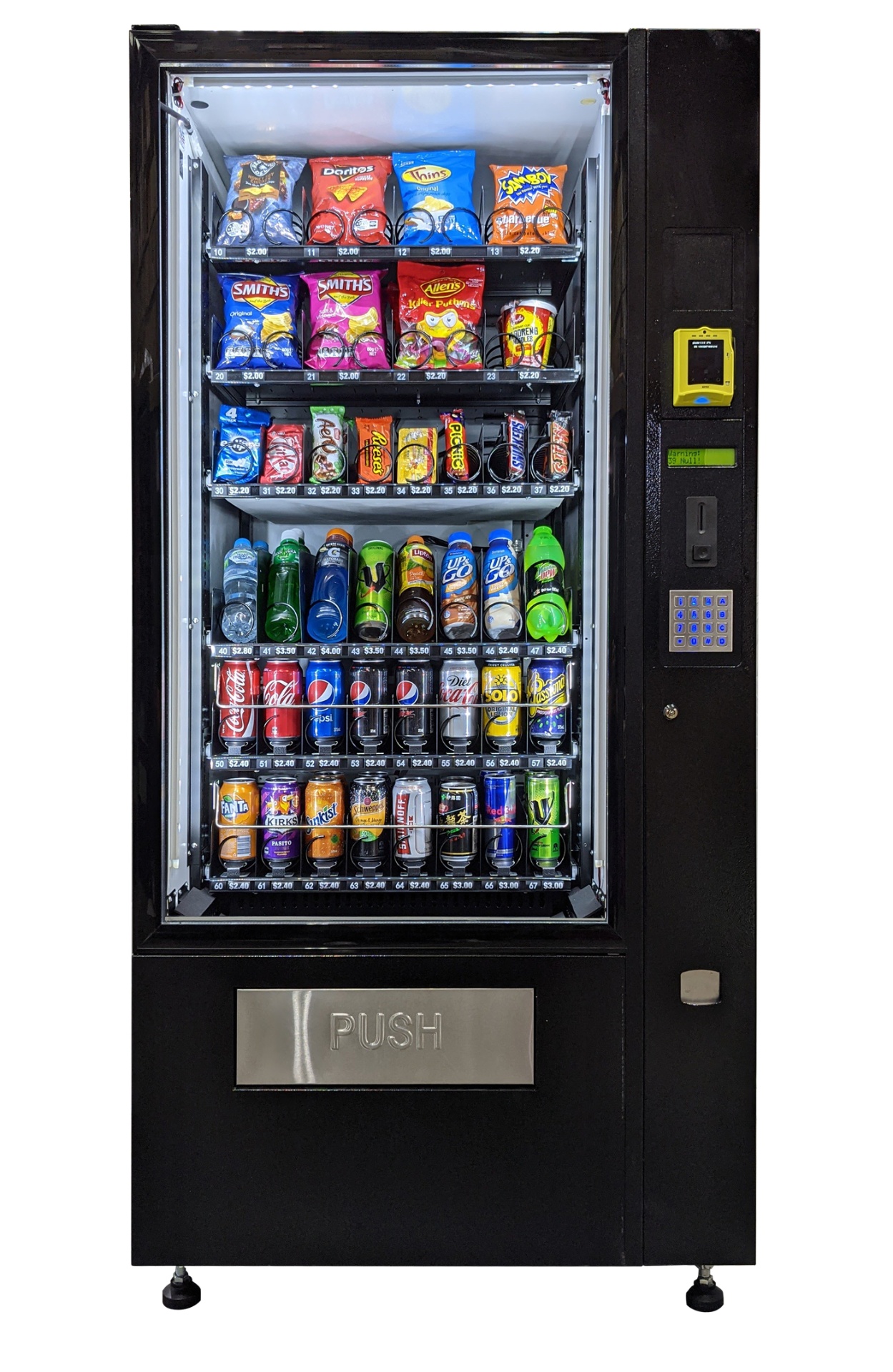
Office vending machines Australia — free vs buying vs leasing
The three ownership models compared for Australian offices, with real costs, commission math and combo-machine coverage.
Read the guide →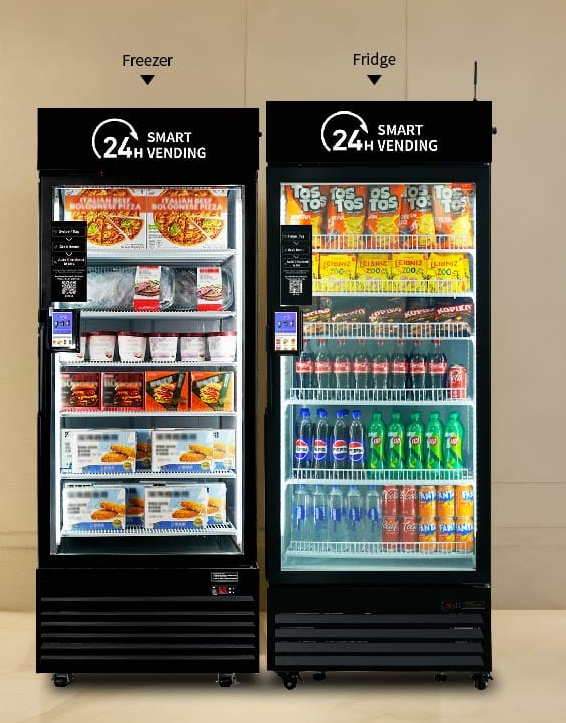
Free office coffee machines for Australian businesses
Bean-to-cup coffee alongside your vending, at zero cost — how it works, what qualifies and typical install timings.
Read the guide →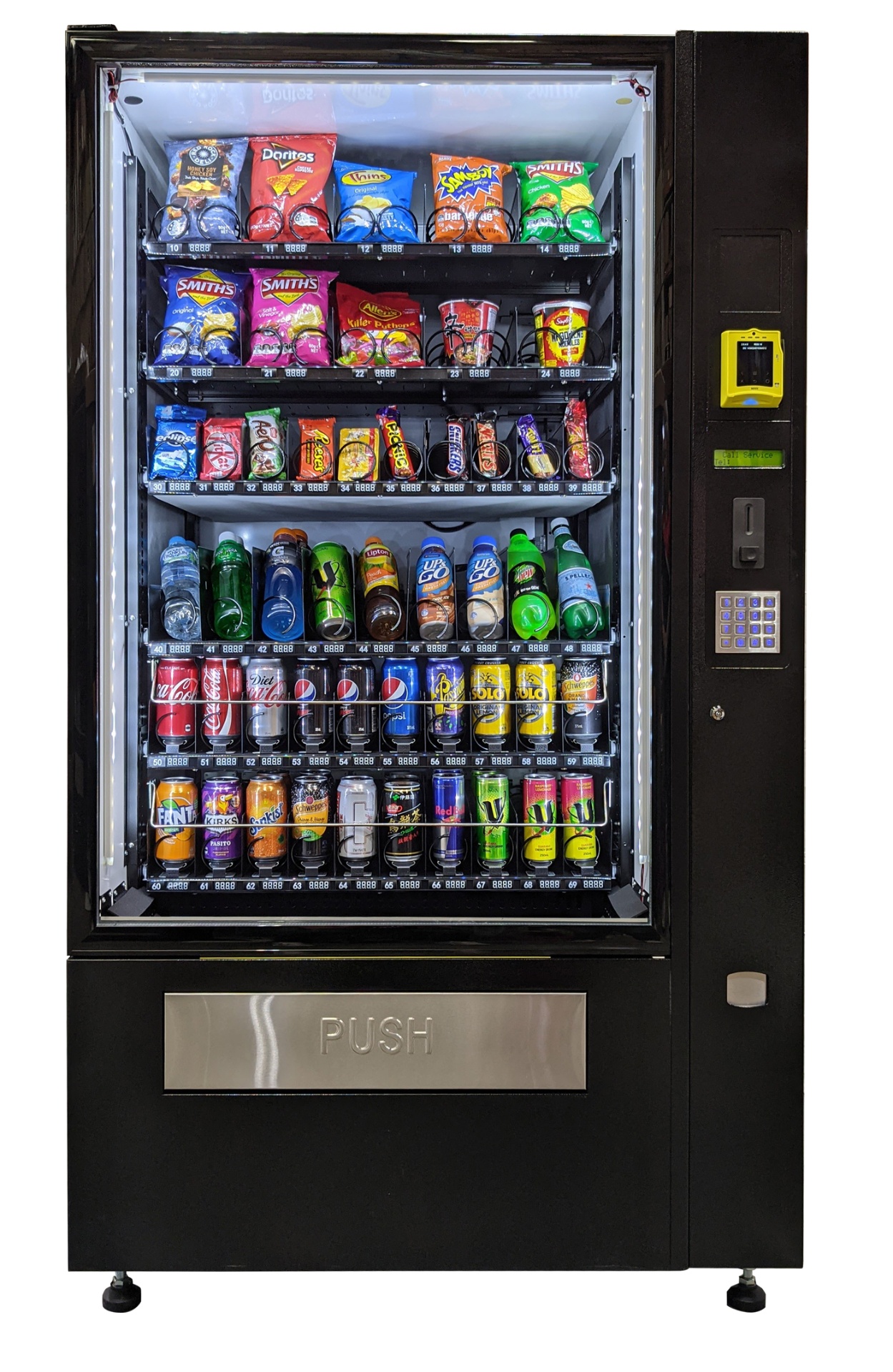
Combination vending machines for Australian warehouses
Snacks, drinks and coffee in one rugged unit — spec, footprint and shift-worker product mixes for warehouses.
Read the guide →Related guides
Related guides, calculators & service solutions
Explore the pillar guides that back the free workplace vending model, use the calculators to model your own site, or jump into the service page that matches your workplace.
Free Vending Machines Australia — Complete 2026 Guide
The full explainer on the $0 placement model — eligibility, coverage, machine types and honest economics.
Read the guideOffice Vending Machines Australia — Free vs Buying vs Leasing
The definitive buyer guide for Australian offices with staff-count thresholds by ownership model.
Read the guideCoffee Vending Machines Australia — Bean-to-Cup & Pricing
Bean-to-cup vs instant, real 2026 capex, per-cup pricing bands, and free-placement for coffee.
Read the guideCombination Vending Machines for Australian Warehouses
The combo-unit deep-dive for shift-work sites — product mix and rugged spec detail.
Read the guide