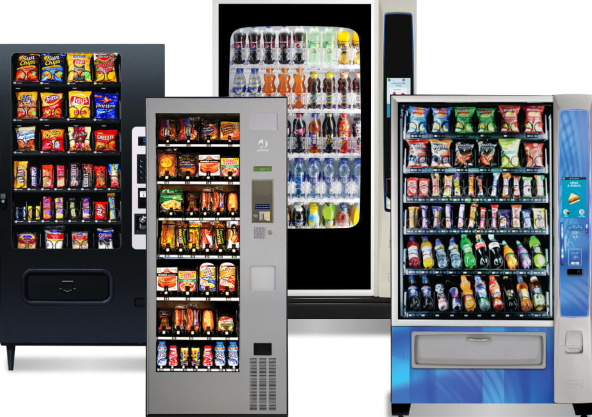
For 95% of Australian workplaces, taking a free managed vending machine is the smarter option than buying one outright. Buying only makes sense in a narrow set of situations — high-margin captive sites, unusual product ranges, or businesses that already have vending logistics staff. Here's the full comparison so you can pick correctly for your site.
Upfront cost — the obvious difference
Buying a machine outright in Australia runs $6,000 to $14,000 for a new commercial-grade combo unit (snacks + drinks), delivered and installed. Cashless-ready smart machines with telemetry sit at the top of that range. Second-hand machines start around $2,500 but come with reliability risk and shorter useful life.
On the free program the workplace pays $0. Machine, delivery, install, cashless reader — all provided by the vending operator.
Ongoing cost — the hidden difference
This is where owned machines quietly get expensive. Costs you take on as the owner:
- Stock purchase — you buy the snacks and drinks up-front, usually $800–$2,000 per restock.
- Restocking labour — someone has to physically refill it every 1–2 weeks.
- Breakdown repairs — coin jams, cashless reader faults, compressor issues. Call-out fees $150–$300, plus parts.
- Cashless payment fees — 1.5–3% per transaction on top of terminal rental.
- Insurance — public liability on the machine, product liability on food.
- Compliance — food safety, expiry management, temperature logs for cold units.
- Energy — a combo machine runs 24/7, roughly $300–$500/year in power.
On the free program, all of the above is the operator's problem. You pay nothing and lift no fingers.
Revenue — the case for buying
There's one honest advantage to owning: you keep the profit. A well-sited machine can gross $800–$2,500/month in retail sales. After stock cost (usually 45–55% of retail), you net roughly $400–$1,200/month. That's real money — if the site actually turns over that volume, and if you have time to manage it.
On the free program, that margin stays with the operator. You get the amenity for staff or customers, but no revenue share.
When buying actually makes sense
Buying is the right call in a small number of situations:
- You already run vending as part of your business (existing fleet, existing logistics).
- The site sells an unusual product range that a standard operator won't stock (specialty supplements, licensed venue-specific products, adult products).
- You're at a captive, high-margin site (private club, resort, boutique gym) where transaction volume is huge relative to staff time.
- You want the sales data and customer-behaviour intel for your own product development.
- You have someone on staff who has capacity to manage restocking and service.
When free is the obvious choice
- You want the amenity but don't want another operational task on your plate.
- You've never run a vending machine before and don't want to learn the compliance and logistics.
- The site's volume is uncertain — free carries zero downside risk.
- Staff and members would use it, but no one on your team has time to restock or troubleshoot it.
- You want to test whether vending is even wanted at the site before committing capital.
Risk comparison
The financial risk profile is very different. If you buy and the site under-performs, you're out the machine cost plus the stock that expired unsold. If you take the free option and the site under-performs, the operator removes the machine — you lose nothing. That asymmetry is why most Australian workplaces pick free even when their site is a strong candidate for buying.
Decision shortcut
Ask three questions: Do you have staff time to manage a machine? Do you have $6k+ upfront and the appetite for stock risk? Are you okay if the site under-performs? If any answer is no, take the free option. If all three are yes and you're confident on volume, buying can pay back within 2–3 years.
One-minute check. Zero commitment.
DavidB, VMA
Vending operator & technician
DavidB has 20+ years of hands-on experience across the Australian vending industry. He has configured, installed, removed and transported thousands of machines — from full site rollouts to the quick "pick-up-and-move" jobs that keep a site happy. Starting in repairs, he learned from some of the industry's longest-serving technicians, covering everything from lock changes and fridge decks to vend motors, control boards, coin mechs and note readers. He was also among the earliest installers of Australia's first telemetry systems, helping shape what operators actually need in the back end: product imaging, stock sales, re-ordering, route planning and even catching thieving fillers who did not know the machine was monitored. Later, he moved into supplier roles across note readers, coin acceptors, credit card readers and other cashless acceptance methods including QR code and RFID systems for specialised vending such as PPE machines.