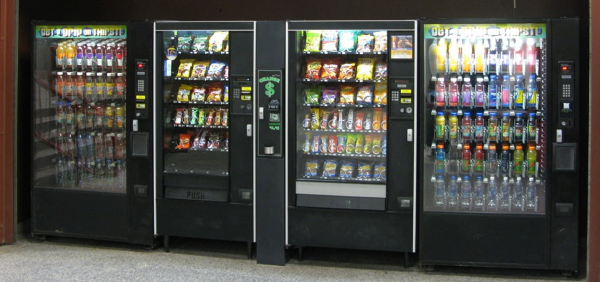
A free vending machine in Australia is exactly what it sounds like — a fully-managed vending machine installed at your workplace at zero cost. No lease, no deposit, no service contract, no monthly fee. The vending operator covers the machine, delivery, installation, cashless payment hardware, restocking, and every repair over the life of the unit. Their return comes entirely from product margin. As long as your site sells enough units per month to justify the visit, the model works — for you and for the operator. This guide is the authoritative reference for how the Australian free vending market actually operates in 2026.
What is a free vending machine, exactly?
Under the free placement model, an Australian vending operator supplies a commercial-grade snack, drink, combination, or coffee machine to a qualifying site at no cost. The operator owns the machine, restocks it, services it, and insures it. The workplace supplies floor space and a standard power outlet. Employees or visitors buy products from the machine at retail prices — usually tap-to-pay via card or phone. The margin between wholesale product cost and retail vend price pays for everything: the machine, the fuel to service it, telemetry systems, cashless transaction fees, and the operator's profit. The workplace itself pays nothing and receives no commission. That last part is the honest trade-off — free placement means the operator keeps the margin.
Real benefits of free workplace vending
1. Zero capital outlay
A new commercial vending machine in Australia costs $6,000–$14,000 for a combo unit and up to $18,000 for a smart-fridge or coffee-plus-vending hybrid. Under free placement, that capital sits on the operator's balance sheet, not yours. There is no depreciation schedule, no financing decision, and no procurement approval to chase.
2. Zero operating cost
Owning a vending machine means owning its stock, its service calls, its cashless reader subscription, its refrigerant recharges, and its public liability insurance. Australian operators average $180–$400 per month in real running costs per machine, before stock. Under free placement, none of that touches you.
3. Genuine amenity for staff
Staff on a warehouse floor, a night-shift ward, or a suburban office 20 minutes from the nearest cafe get a real amenity — cold drinks, snacks, coffee, water — without leaving the site. For 24/7 operations (hospitals, security, logistics, gyms) that matters more than any coffee-shop voucher scheme.
4. Modern payment out of the box
Every machine placed on the free program in 2026 ships with tap-to-pay hardware supporting Visa, Mastercard, Amex, Apple Pay, Google Pay, and Australian bank apps. Coin and note acceptance is optional. There is no cash to bank, no float to manage.
5. Range that evolves with the site
Because the operator has a full sales feed from every machine, product ranges are tuned monthly based on what actually sells. A warehouse site drifts toward caffeine and hot food; a gym site drifts toward protein and low-sugar drinks; an office drifts toward the standard snack mix. The workplace never has to buy stock, forecast demand, or rotate expiring product.
Where free vending is available in Australia
Coverage in 2026 is genuinely national. Every capital city — Sydney, Melbourne, Brisbane, Perth, Adelaide, Canberra, Hobart, Darwin — has same-week install availability for qualifying sites. Regional coverage extends to every major population centre including the Central Coast, Newcastle, Wollongong, Geelong, Ballarat, the Gold and Sunshine Coasts, Toowoomba, Cairns, Townsville, Bendigo, Bunbury, and the Barossa. Remote and FIFO sites — mining camps, offshore-servicing hubs, remote health clinics — are handled on a scheduled basis and typically install alongside the next crew changeover.
Who qualifies for a free vending machine?
Eligibility is about foot traffic, not business type. The operator needs enough transactions per month to cover the service run. Sites that clear the threshold consistently include: workplaces with 25+ daily staff, warehouses and distribution centres with a permanent crew, 24/7 gyms and leisure centres, TAFEs and universities, private hospitals and day surgeries, aged-care facilities, licensed venues, hotels with in-house staff, shopping centres and transport hubs, and mining or FIFO camps with fixed rosters. Home offices, sites with under ten people, and seasonal venues typically do not qualify — the maths does not work for either side.
What kind of machine can I get for free?
Every mainstream format is available on the free program: snack-only machines, cold-drink machines, combination machines (snacks and drinks in one cabinet), healthy-only machines, coffee machines (bean-to-cup for offices), smart fridges for grab-and-go fresh food, and PPE machines for industrial sites. The operator recommends the format based on site profile, but the workplace has the final say. Sites often start with a combo and add a coffee machine or smart fridge once the first unit proves demand.
So where is the catch?
There isn't one, but there is a trade-off, and the honest version is this: the workplace does not receive commission. Every dollar of margin goes to the operator, which is what makes the $0 offer sustainable. If you want to keep the margin, you buy or lease the machine and take on the running costs. Both models are legitimate; they suit different sites. The free model wins when the workplace values zero admin and zero risk over a small commission stream.
Related programs, industries and areas
Free placement scales across every mainstream Australian workplace type. For offices weighing the models, the office vending buyer guide walks through free vs buy vs lease. For coffee culture, the free office coffee machines guide covers bean-to-cup on the same free-placement terms. Warehouses and factories usually pair a combination machine with cold drinks — see the combo machines for warehouses guide. In NSW, coverage is handled by the Sydney & NSW install team, the Newcastle & Hunter team, and the Western Sydney industrial team. By site type: office, warehouse & factory, or gym & fitness.
How to check your site
The fastest path is the online suitability tool — three questions and a one-business-day reply. If the site qualifies, an install window is scheduled within the same call. If it doesn't, you'll be told directly and pointed toward machines you can buy or hire that fit smaller premises.
Instant score. No obligation, no follow-up spam.
Next article
Office vending machines in Australia — free placement vs buying vs leasing
The three ways an Australian office can get a vending machine, what each really costs over five years, and which model fits which office.
Read next →Related service
All four pillar guides — the SEO hub
Every deep-dive on free vending in Australia — the four pillars plus supporting articles, organised into topic clusters.
See service page →DavidB, VMA
Vending operator & technician
DavidB has 20+ years of hands-on experience across the Australian vending industry. He has configured, installed, removed and transported thousands of machines — from full site rollouts to the quick "pick-up-and-move" jobs that keep a site happy. Starting in repairs, he learned from some of the industry's longest-serving technicians, covering everything from lock changes and fridge decks to vend motors, control boards, coin mechs and note readers. He was also among the earliest installers of Australia's first telemetry systems, helping shape what operators actually need in the back end: product imaging, stock sales, re-ordering, route planning and even catching thieving fillers who did not know the machine was monitored. Later, he moved into supplier roles across note readers, coin acceptors, credit card readers and other cashless acceptance methods including QR code and RFID systems for specialised vending such as PPE machines.