
A free office coffee machine in Australia works the same way free vending does — the operator supplies the machine, installs it, services it, and restocks beans, milk and consumables at no cost to the workplace. Staff pay per cup, usually by tap-to-pay, at a price competitive with a takeaway cafe. If the site does enough cups per week to cover the service run, the model is sustainable and the office pays nothing. This guide explains how the model actually works for coffee specifically, the eligibility thresholds (which are different from snack vending), the machine types available, and where free coffee placement is offered across Australia in 2026.
Why an office coffee machine matters
A well-run office coffee machine is the highest-utilisation piece of amenity in most Australian workplaces. In a 50-person office, a bean-to-cup unit averages 60–120 cups per day — more than any snack machine, more than any water cooler, more than any fridge. It saves the collective 15–30 minutes per staff member per day that a cafe walk absorbs, and it removes the meeting-room awkwardness of instant coffee. For hybrid workplaces it also does something less obvious: it makes coming into the office slightly more attractive on the days people are undecided.
How the free coffee model works
The vending operator provides a commercial bean-to-cup machine — the same class of unit you'd see in a hotel lobby or premium waiting room. It grinds fresh beans per cup, steams milk (or dispenses long-life milk if the machine is a milk-powder model), and produces espresso, long black, flat white, latte, cappuccino, hot chocolate, and hot water for tea. Staff pay by tap or by app; the operator monitors cup counts, hopper levels and error codes remotely, and the site gets a service visit whenever beans, milk or waste run down — typically every one to two weeks.
Everything is bundled: machine, delivery, install, plumbed water connection where required, milk-line replacement, grinder burr replacement, descaling, and public liability insurance on the machine. The office supplies floor space, a power outlet, and (for plumbed units) a cold-water tap within reach.
Who qualifies for a free coffee machine?
Coffee has a different eligibility threshold from snack vending because a good bean-to-cup machine costs more, uses more consumables, and requires more frequent service. The operator needs roughly 40 daily coffee cups to sustain the service run. That translates roughly to:
- An office with ~50+ staff on site most days (typical average of ~1 cup per person per day).
- A smaller office (25–50 staff) where coffee culture is heavy — professional services, agencies, design studios, tech.
- A shared floor or coworking space where the machine serves multiple tenants.
- A hotel back-of-house, licensed venue, or 24/7 fitness club with a permanent staff crew.
- A private hospital, day surgery, or aged-care facility with regular visitors and staff.
Small offices under 25 staff usually don't qualify for a free bean-to-cup machine, but often do qualify for a free instant-hot-drink module bundled into a combination vending machine — same drinks, smaller unit, lower cup threshold.
Machine types offered on the free program
Bean-to-cup, fresh milk
The premium option. Grinds beans per cup, steams fresh milk from a chilled fridge module. Cafe-standard drinks. Suits offices that already have a coffee culture and want to keep the same quality. Requires plumbed water on qualifying sites.
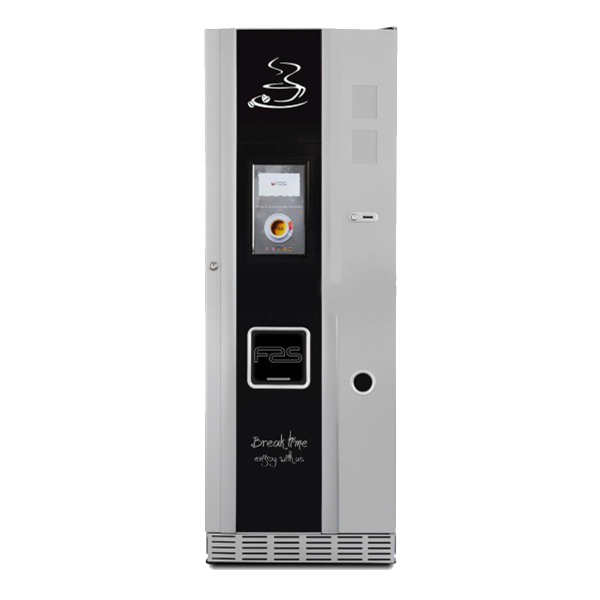
Bean-to-cup, powdered milk
Same grind-per-cup espresso, but with topping milk from a sealed powder canister instead of a chilled fresh-milk line. Lower cost per cup, less maintenance, and easier to place in offices without a nearby water tap. Common in industrial and warehouse offices.
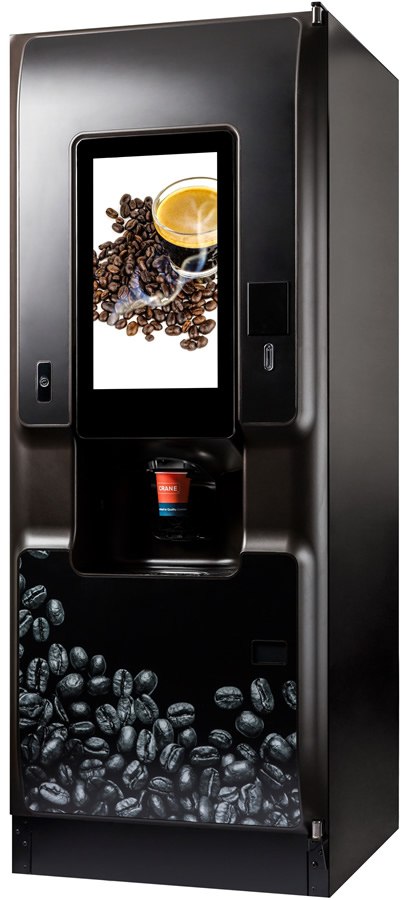
Instant hot-drink module in a combo machine
Smaller offices that don't clear the bean-to-cup threshold can still get free instant coffee, tea, and hot chocolate from a hot-drink module built into a combination vending machine — one cabinet, one power outlet, all drinks and snacks in the same unit.
Water tank, waste drum, self-cleaning and telemetry
Not every workplace has a nearby cold-water tap or a floor waste — and it doesn't need one. Every free-placement bean-to-cup unit we install can run fully self-contained, with an on-board water supply, an on-board waste drum, automatic self-cleaning cycles, and live telemetry that flags a problem before anyone has to call it in.
22-litre internal water tank with float switch
Where a plumbed water connection isn't practical, the machine carries its own 22-litre fresh-water tank. That tank feeds both the espresso boiler and the hot-water outlet for tea and long blacks. A float switch inside the tank monitors the level continuously — as soon as the water drops below the safe threshold, the machine locks itself out of drink production so the boiler and pump can never run dry. Staff see a clear on-screen message; nobody can accidentally damage the machine by using it empty.
20-litre waste drum with float switch
Grounds, rinse water and self-cleaning wash water all drain into a sealed 20-litre waste drum housed inside the cabinet — no floor waste, no plumbing to a sink required. A second float switch sits at the top of the drum. When it trips, the machine stops dispensing until the drum is emptied on the next service run, which prevents any overflow. Because the drum is sealed and lined, there's no smell and no drip tray for staff to manage.
Self-cleaning cycles, programmable twice a day
The machine is genuinely self-cleaning, not just self-rinsing. Programmable cycles run at low-use windows — typically pre-6am and post-7pm — and wash the mixing bowls, brew group, milk lines and waste lines with hot water and a food-safe cleaning agent. Two full cycles per 24 hours is standard; the operator tunes the schedule to the site's shift pattern. Staff arrive to a clean machine every morning, and the site never has to run a manual clean.
Telemetry, cashless reader and error alerts
The cashless tap-to-pay reader is also the machine's live data link. Cup counts, hopper levels, boiler temperature, tank and waste-drum float states, and any fault code stream in real time to the operator's dashboard. When a fault is raised — low beans, water tank low, waste drum full, milk fridge warm, grinder jam — the system pushes an ERROR notification to the refiller and the owner-operator so a service run is dispatched before the site notices. In practice, most issues are resolved before the first staff member queues for a coffee.
Where free office coffee is available
Free coffee placement is offered in every Australian capital and most regional centres in 2026. Victoria coverage includes Melbourne metro plus Geelong, Ballarat and Bendigo. NSW covers Sydney metro, the Central Coast, Newcastle, Wollongong and the Illawarra. Queensland covers Brisbane, the Gold Coast, Sunshine Coast, Toowoomba, Cairns and Townsville. WA covers Perth metro, Mandurah and Bunbury. SA covers Adelaide metro and the Barossa. ACT covers all of Canberra. Regional and remote sites are handled on scheduled service runs.
Related programs and areas
Coffee is one leg of the free-placement program. Most offices pair a bean-to-cup unit with snacks and cold drinks in a combination vending machine — see the free vending machines complete guide for how the wider program works, and the office vending buyer guide for a side-by-side of free vs buy vs lease. If you're in NSW, our Sydney & NSW install team and Newcastle & Hunter install team cover metro and regional postcodes; Western Sydney industrial estates are covered by the Western Sydney team. By site type: office, warehouse & factory, or gym & fitness.
Check your office
The suitability check takes about a minute and asks three questions: how many people on site, average coffee culture, and whether a plumbed water tap is within reach. You'll get a direct answer within one business day — free coffee, free vending with a hot-drink module, or a hire/lease option that fits smaller sites.
How many staff are at your workplace?
Free installation is available for eligible sites with 10+ regular staff or foot traffic.
One minute, three questions. Our install team confirms your eligibility within one business day.
Next article
Combination vending machines for Australian warehouses
One cabinet, snacks and drinks together, built for a warehouse floor and a rotating shift roster. Free placement, capacity planning, and 24/7 service coverage.
Read next →Related service
How free office coffee installs work
The end-to-end install process for free bean-to-cup coffee machines in Australian offices — timelines, site-check requirements and product mix.
See service page →DavidB, VMA
Vending operator & technician
DavidB has 20+ years of hands-on experience across the Australian vending industry. He has configured, installed, removed and transported thousands of machines — from full site rollouts to the quick "pick-up-and-move" jobs that keep a site happy. Starting in repairs, he learned from some of the industry's longest-serving technicians, covering everything from lock changes and fridge decks to vend motors, control boards, coin mechs and note readers. He was also among the earliest installers of Australia's first telemetry systems, helping shape what operators actually need in the back end: product imaging, stock sales, re-ordering, route planning and even catching thieving fillers who did not know the machine was monitored. Later, he moved into supplier roles across note readers, coin acceptors, credit card readers and other cashless acceptance methods including QR code and RFID systems for specialised vending such as PPE machines.