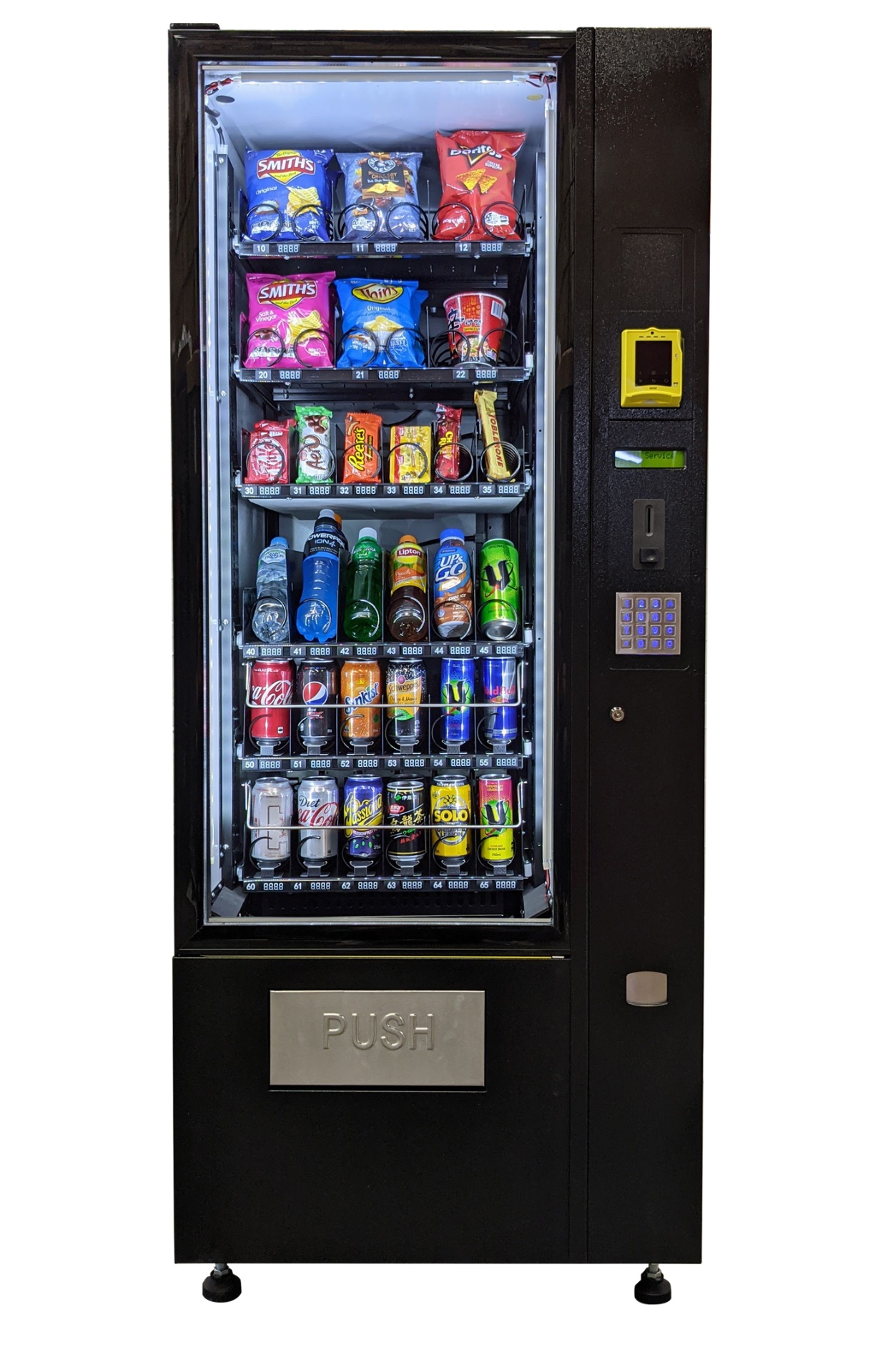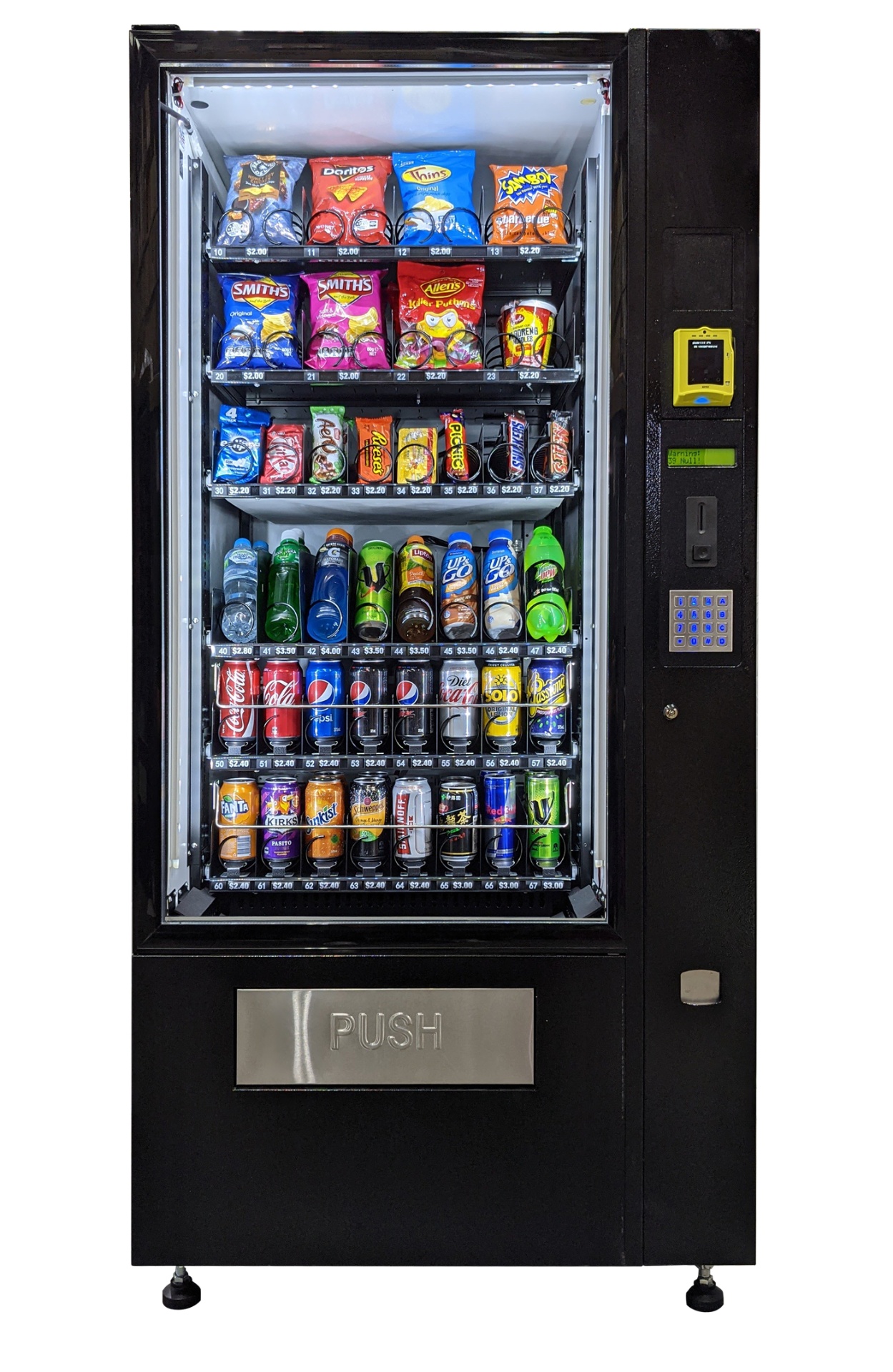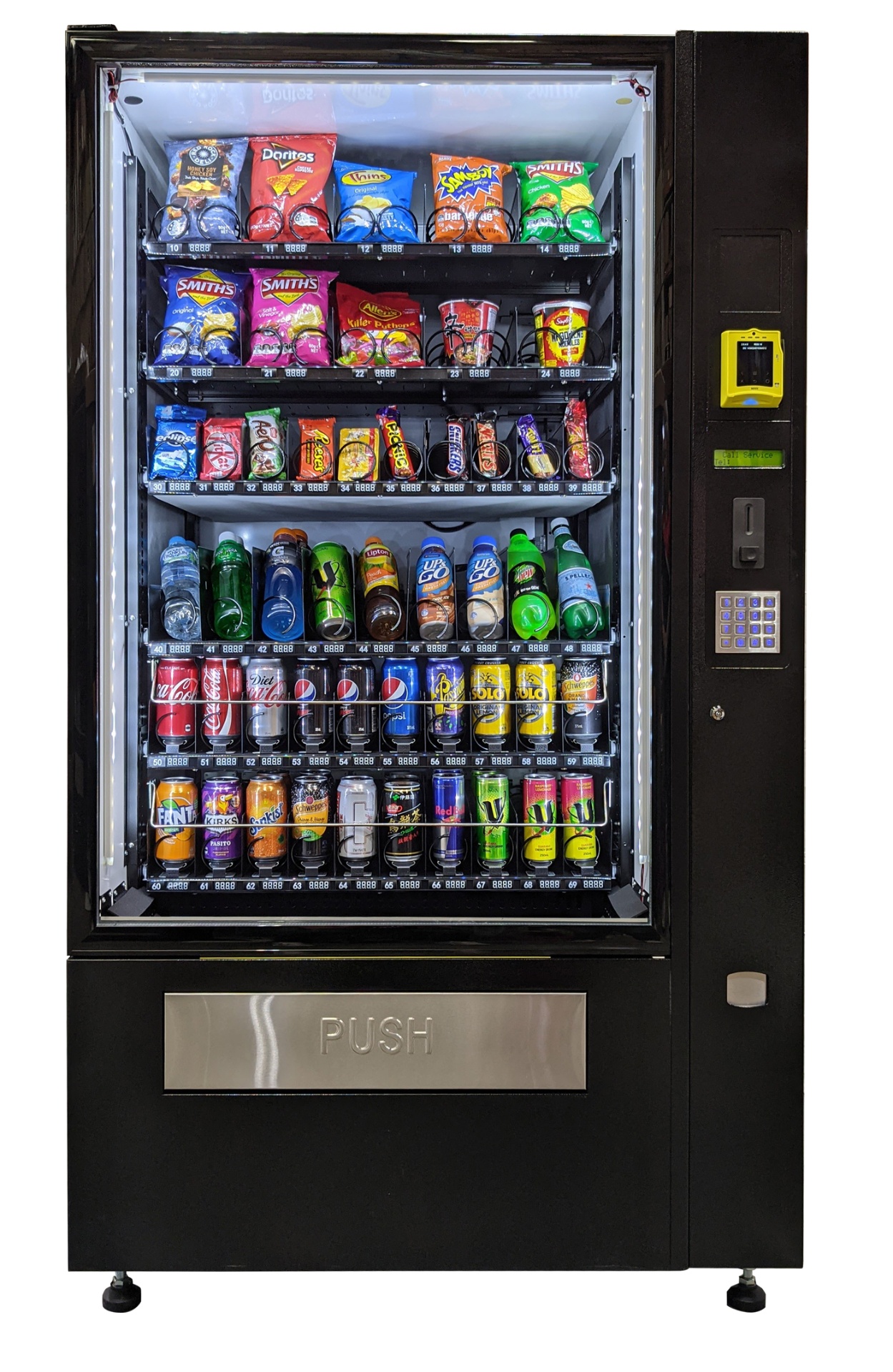
This page explains exactly how a free drink vending machine works in Australia, what it costs (the honest answer is the electricity and about half a square metre of floor), which sites qualify, what goes inside the machine, and why the coming summer is the point at which a cold drink machine stops being a nice-to-have and starts saving you real working hours.
It is written to be read straight through or dipped into. Each heading below answers one specific question on its own, so if you only want the cost table or the eligibility rules, skip to that section.
Free drink vending machine: a plain definition
A free drink vending machine is a refrigerated vending machine supplied, delivered, installed, stocked, serviced and insured by a vending operator at no charge to the host site. The host provides floor space and power. The operator recovers its costs from the margin on drinks sold through the machine, so there is no rental fee, no lease and no lock-in contract. In Australia this arrangement is also called a free placement, a free-of-charge vending agreement or free vending machine hire.
How a free drink vending machine actually works
The arrangement is a placement, not a sale or a lease. We own the machine and everything in it. You give it a spot and a power point. Staff and visitors buy drinks from it by tapping a card or phone, and the margin on those sales pays for the machine, the stock, the servicing and the delivery runs. Nothing is invoiced to your business at any point.
Because the operator carries the cost, the placement only works where the machine will sell. That is the entire catch, and it is worth stating plainly: we will decline sites where the traffic cannot support the stock. It also means our interests are aligned with yours — an empty or broken machine earns nothing, so keeping it full and cold is our problem, not your facilities team's.
Each machine reports its own stock levels and temperature back to us over a mobile connection. That telemetry is what makes the model work at scale: restocks are triggered by what has actually sold, and a refrigeration fault raises an alert before anyone at your site notices warm drinks.
What a free drink vending machine costs an Australian workplace
The only real cost to your site is electricity. A modern glass-front drink machine with LED lighting and an energy-saving controller typically draws in the order of a few dollars a week, comparable to a domestic bar fridge left running. Everything else in the table below sits with us.
| Item | Who pays | Cost to your site |
|---|---|---|
| Cold drink machine or smart cooler | FreeVendingMachines.au | $0 |
| Delivery and positioning | FreeVendingMachines.au | $0 |
| Installation and commissioning | FreeVendingMachines.au | $0 |
| Restocking and product supply | FreeVendingMachines.au | $0 |
| Cleaning, servicing, refrigeration repairs | FreeVendingMachines.au | $0 |
| Public liability and equipment insurance | FreeVendingMachines.au | $0 |
| Cashless payment terminal and fees | FreeVendingMachines.au | $0 |
| Electricity to run the machine | Your site | Roughly $2–$4 a week |
| Floor space (about 0.5 m²) and a power point | Your site | $0 |
Why drink vending demand spikes in an Australian summer
Cold drink sales in Australian workplaces are strongly seasonal. Across the sites we service, chilled drink volume through December, January and February typically runs well above the winter baseline, and the hotter the working environment, the sharper the difference. A climate-controlled office sees a moderate lift. A tin-roofed warehouse, a workshop, a distribution centre or an outdoor crew room sees a much larger one.
The reason is simple physiology rather than marketing. Work in heat increases fluid loss, and people replace fluid with whatever is closest. If the closest option is a service station five minutes away, staff leave site. If the closest option is a chilled machine in the lunchroom, they stay. That is why summer is the practical moment to install: the machine earns its place in the first fortnight and keeps people on site during the months when heat costs you the most productive time.
Stocking changes with the season too. Through summer we shift the planogram towards water, electrolyte and hydration drinks, sugar-free soft drink, iced coffee and iced tea, and we increase restock frequency so the coldest, fastest-moving lines never run out during a heatwave week. Telemetry in each machine reports stock levels remotely, so the restock is triggered by real sell-through rather than a fixed calendar visit.
- Water and electrolyte hydration weighted heavier from November to March
- Restock frequency lifted during declared heatwave periods
- Refrigeration set points checked before summer on every installed machine
- Sugar-free and low-sugar lines expanded for sites with health policies
What goes inside the machine
The product plan is agreed with your site before the first stock load and then adjusted from real sales data, not guesswork. If your workplace has a health and wellbeing policy, we can weight the machine towards water, sugar-free and low-sugar lines, or exclude categories entirely. If you run night shift, energy and iced coffee lines get more space.
Pricing is set to be comparable with a convenience store rather than an airport kiosk, because the machine only earns when people buy from it repeatedly.
| Category | Examples | Best suited to |
|---|---|---|
| Chilled water | Still and sparkling bottled water | Every site — the top seller in hot months |
| Electrolyte and hydration | Electrolyte drinks and hydration formulas | Warehouses, workshops, outdoor and trade crews |
| Soft drink | Full-sugar and sugar-free cans and bottles | Offices, lunchrooms, reception areas |
| Energy drinks | Standard and sugar-free energy cans | Night shift, logistics, gyms, 24/7 sites |
| Iced coffee and flavoured milk | Chilled coffee and milk-based drinks | Early-start sites and morning smoko |
| Juice and iced tea | Fruit juice, iced tea, low-sugar options | Sites with wellbeing or health policies |
Which sites qualify for a free drink machine
Eligibility comes down to foot traffic and access, not company size. As a rule of thumb, a free drink machine needs enough daily traffic to move roughly a case of drinks a day across the week. A site with 25 or more people on the floor most days will almost always support a drink-only machine. Smaller sites can still qualify where traffic is concentrated — a 15-person workshop where everyone breaks at the same two times can outperform a 40-person office with staggered hours.
Access matters as much as headcount. The machine needs a ground-floor path or lift access, a doorway of at least 800 mm, a standard 10 amp power point within about two metres, and a floor that is level and out of direct rain. If your site has stairs, a tight loading dock or soft landscaping between the truck and the door, tell us in the enquiry — we install into difficult sites regularly and will bring the right equipment rather than turning up and failing.
- 25+ people on site most weekdays is a comfortable qualifier
- 15–25 people can qualify where breaks are concentrated or shifts run late
- Ground floor or lift access, 800 mm doorway, standard power point
- Undercover position, level floor, out of direct sun and rain
What happens from enquiry to first cold drink
The process is deliberately short, because most sites want the machine in before the hot weather rather than after it.
- Step 1 — You send the enquiry with headcount, site type and location.
- Step 2 — We confirm eligibility, usually within one business day.
- Step 3 — A site check confirms the spot, the door width, the power point and the delivery path.
- Step 4 — Delivery and install, including power-up, cooling down and payment terminal activation.
- Step 5 — First stock load agreed with you, then telemetry-triggered restocks from there.
Free drink machine, rented machine or bought machine — which is right
There are three ways an Australian business can put cold drinks in a lunchroom, and they suit different situations. Buying a drink machine outright means you own the asset and keep the margin, but you carry the purchase price, the refrigeration servicing, the stock buying, the shrinkage and the staff hours spent restocking. Renting means a fixed monthly fee whether the machine sells anything or not. A free placement means no capital, no fee and no labour, in exchange for the operator taking the product margin.
The rule of thumb is straightforward. If drink sales are part of your business model — a gym selling its own supplement line, a club with a bar, a retailer with margin targets — owning can make sense. If drinks are a staff amenity rather than a revenue line, a free placement is almost always the better outcome, because the hidden cost of self-operating is the staff time, not the machine.
| Free placement | Rented machine | Bought machine | |
|---|---|---|---|
| Up-front cost | $0 | $0–$500 setup | $4,000–$12,000+ |
| Ongoing fee | $0 | Monthly rental | Servicing and repairs |
| Who buys stock | Us | Usually you | You |
| Who restocks | Us | Usually you | You |
| Who repairs it | Us | Depends on contract | You |
| Who keeps product margin | Us | You | You |
| Staff hours required | None | Several hours a month | Several hours a month |
Drink-only machine or a combination machine
A drink-only machine is a refrigerated unit with every row chilled — usually five to seven rows of cans and bottles behind a glass front. It holds the most cold stock and is the right choice for hot sites, gyms, trade workshops and any location where hydration is the main need.
A combination machine chills the lower rows for drinks and runs ambient rows above for snacks. It suits offices and smaller sites where one machine has to cover both morning tea and afternoon thirst. Where a site has both the traffic and the floor space, a drink machine plus a snack machine side by side outperforms a single combo, because neither category has to compete for shelf space during its peak.
- Drink-only: maximum chilled capacity, best for hot and industrial sites
- Combination: drinks below, snacks above, best for offices under 40 people
- Twin lineup: separate drink and snack machines for sites above 60 people
How to check this offer is genuine before you commit
A free machine sounds like it must have a catch, so it is reasonable to verify the offer before you sign anything. There is no lock-in contract, no rental line, no minimum spend and no exit fee. The program is funded entirely by product sales through the machine, which is why the placement has to make sense for both sides before we install.
Everything we claim is checkable. You can call the number on this page and speak to the person who will run your install. You can ask for the certificate of currency for our public liability cover before the machine arrives. You can ask for the names of comparable sites in your area and what their machine actually turns over. And you can end the arrangement and have the machine removed at no cost if it is not working for you.
- No contract, no rental, no minimum spend, no exit fee
- Certificate of currency for public liability provided on request
- Machine removed free of charge if the site changes its mind
- One named contact for your site, reachable by phone on 0401 662 678