Local SEO guide
Local SEO for vending operators: titles, meta, local content and backlinks
Most workplace vending enquiries start with a local search: a site manager in Wetherill Park, Paget or Canning Vale types "free vending machine" plus a suburb and calls whichever business looks most local and most credible. This guide covers the four things that decide who appears: page titles, meta descriptions, genuinely local content, and the links and listings that prove a business is real.
What is local seo?
Local SEO is the work of making a business show up when people search for a service in a particular place. It combines on-page signals (titles, headings, local detail), a verified Google Business Profile, consistent business details across directories, and links from other local websites.
Last reviewed 19 October 2026
Page titles: one suburb, one service, under 60 characters
The title tag is the blue headline in Google's results and the strongest single on-page signal. For a suburb page it should name the service and the place, and nothing else that competes for attention. "Free Vending Machines Wetherill Park | $0 Install" works because the searcher sees their suburb and the offer before the title is cut off.
Google truncates titles at roughly 580 pixels, which is about 55 to 60 characters for most text. Anything after that is replaced with an ellipsis, so the brand name belongs at the end where losing it costs little. Avoid stacking several suburbs into one title; it reads as spam and splits relevance. If a page genuinely covers a precinct, name the precinct the locals use, such as "Smithfield–Wetherill Park industrial area".
- Lead with the service, follow with the suburb, finish with the brand.
- Keep each title unique across the site; duplicates make Google pick one and ignore the rest.
- Match the H1 closely to the title so the page confirms what the result promised.
Meta descriptions that earn the click
The meta description does not directly move rankings, but it decides whether a searcher clicks. Treat it as a two-sentence advert of 140 to 160 characters: what you offer, who it is for, and why it is risk-free. For workplace vending that usually means stating the cost (nothing), the install time and the kind of site served.
A good example: "Free drink and snack vending machines for Yennora warehouses and factories. $0 install, card payments, restocked weekly. Request a site visit today." It repeats the suburb once, names the audience and gives a next step. Google rewrites descriptions it finds generic, so specific local wording is more likely to be shown as written.
Local content that only a local business could write
Pages that swap one suburb name into a template are easy for Google to spot and rarely rank. The pages that win describe the place: postcodes, industrial estates, main roads, shift patterns and the specific problem a business there has. In Paget it is the drive along Nebo Road for smoko; in Truganina it is warehouse crews on rotating shifts with no café inside the estate; in Kalgoorlie it is heat, distance and fly-in rosters.
Write each page as if a site manager from that suburb will read every line. Mention the precincts they know, the hours they work and the drinks and food they actually buy. Include a short definition, a worked example of the wage cost of leaving site, an FAQ that answers local questions, and a clear enquiry form. Aim for at least 990 words of useful copy, broken into short sections with descriptive headings so both readers and AI search tools can lift a clean answer.
- Name the postcode and two or three real precincts or streets.
- Describe the workforce: shifts, crew sizes, typical break times.
- Show the stocking plan that suits that site type.
- Add proof: install times, insurance cover, service frequency.
Google Business Profile: the map pack entry
The map results at the top of local searches come from Google Business Profiles, not websites. A vending operator usually qualifies as a service-area business: you travel to customers rather than receive them at a shopfront, so the profile lists the suburbs you serve and hides the home or depot address. Choose "Vending machine supplier" as the primary category, add the service areas you genuinely cover, and complete the description, hours, phone number and website link.
Only create one profile per real business location. Separate listings for every suburb without a staffed address breach Google's guidelines and are routinely suspended, which can take the genuine listing down with them. Instead, strengthen the single profile with photos of real installs, regular posts and replies to every review.
Backlinks and citations that prove you are real
Links from other websites act as references. For a local service the most valuable ones are local and relevant rather than numerous: the regional chamber of commerce, the industrial estate's business association, a supplier's "where to find us" page, a sponsorship of a local sports club, or a case study published by a customer. Each tells Google that real businesses in the area know you.
Citations are listings of your business name, phone and service area in directories such as True Local, Yellow Pages, Hotfrog and industry associations. They should match the Google profile exactly. Avoid paid link schemes and bulk directory submissions; they add risk without adding trust.
A simple monthly routine
Local SEO rewards consistency more than bursts of effort. Once a month, check Search Console for suburb pages gaining impressions without clicks and rewrite their titles and descriptions. Add one new installation photo and post to the Google profile. Ask one satisfied host for a review. Look for one new local link opportunity. Over a year that routine compounds into a site and profile that look, correctly, like the most established local option.
Experience you can check
Who installs your machine in Australia, and exactly how it runs
Written and maintained by Dan Barnes — owner-operator, Free Vending Machines Australia
I have been placing and servicing vending equipment in Australian workplaces for over two decades — offices, warehouses, gyms, hospitals, schools, remote camps and government sites. Everything on this page reflects how we actually run installs across every state and territory: the machines we physically stock, the lead times our crews hold to, and the service standard we carry at our own cost. Nothing here is licensed boilerplate.
- Typical Australian lead time: 7–14 days from a qualified request to a working machine.
- $20 million public liability plus product liability — certificate of currency supplied to your facilities or WHS team on request.
- Australian-owned, Australian-serviced. Same operator answers the phone on0401 NO COST.
- Nayax cashless readers and live telemetry on every machine — not a retro-fitted coin mech.
What to expect, step by step
1. Two-question request
You tell us the workplace type and rough head count. No paperwork, no credit check, no sales visit required to get an answer.
2. Site check within 24 hours
We confirm head count, foot traffic, power location and access (lifts, stairs, loading dock, after-hours security) and pick the right machine.
3. Delivery and install
Our crew delivers, levels and commissions the machine, tests the cashless reader end-to-end and takes the packaging away. Nothing is invoiced.
4. Telemetry goes live
Every vend, temperature reading and fault code streams back to us. Low stock is flagged 2–3 days before a row empties.
5. Ongoing service, still $0
Restocks, cleaning, repairs, parts, product-mix changes and $20m public liability are all carried by us. Ask us to remove it and we do — no exit fee.
The exact machines we install
These are our three workhorse combination machines — photographed as they leave our workshop, stocked with the Australian brands your team actually buys. We recommend one based on your head count and floor space, never on what happens to be in the truck.
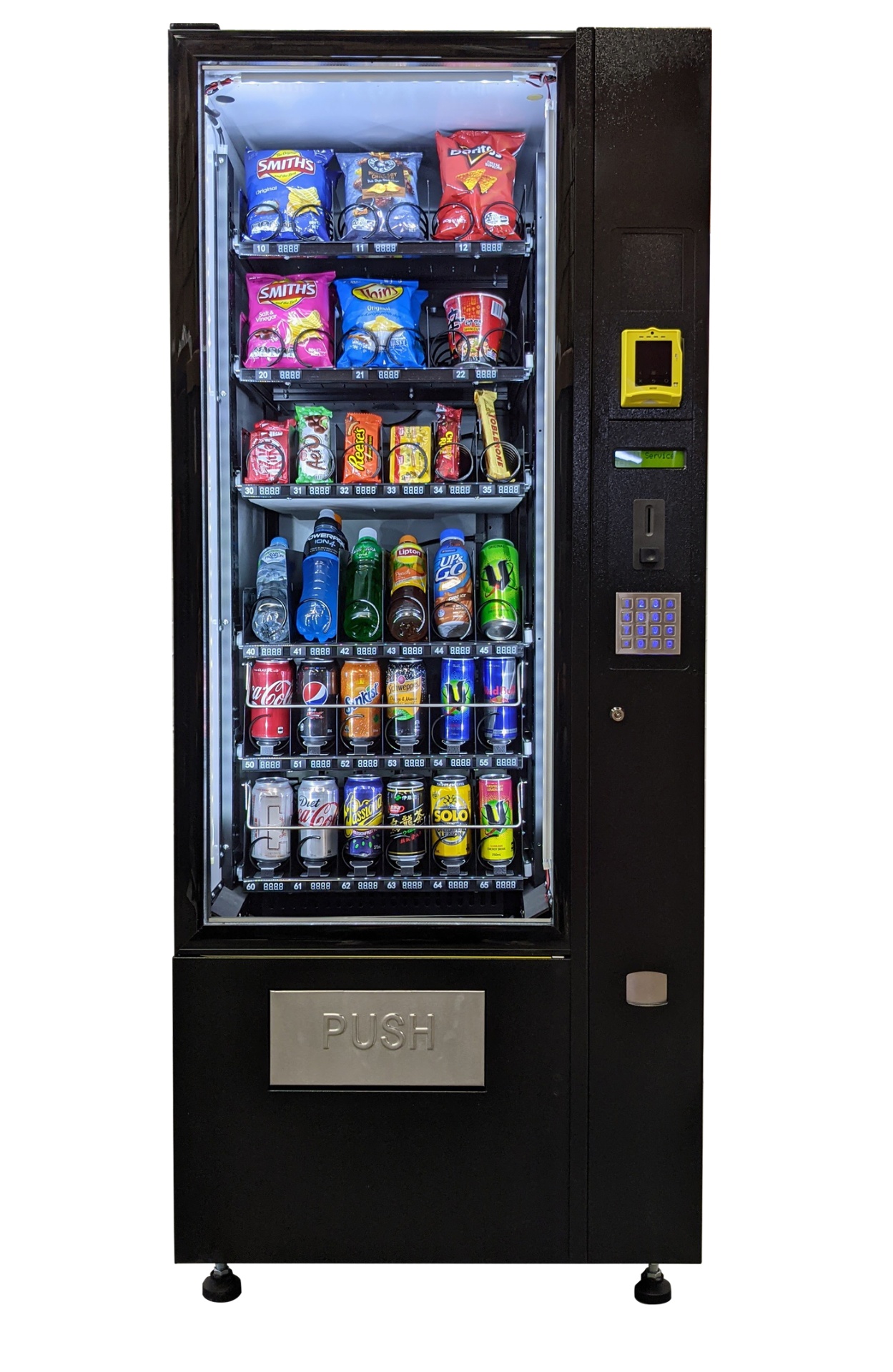
CV3 combo — slimline snack & drink
890mm wide · 1830mm high · 830mm deep
- Best for 15–40 staff, tight lift lobbies and narrow doorways to lunchrooms
- 6 shelves: 2 crisps, 1 confectionery, 3 refrigerated drink rows
- Nayax tap reader — Visa, Mastercard, Amex, Apple Pay, Google Pay
- Standard 10-amp GPO, no plumbing, no data cabling
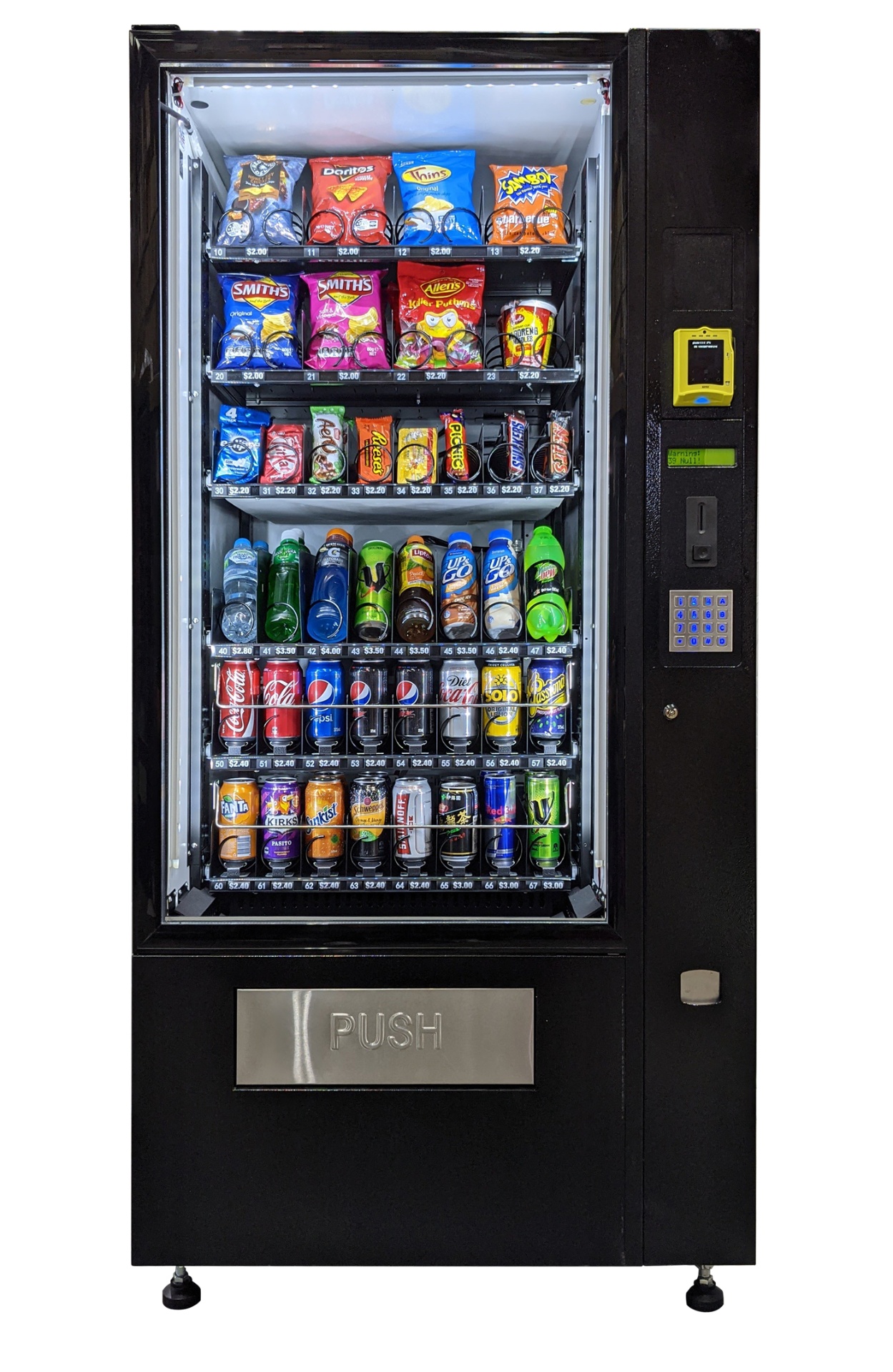
CV4 combo — mid-size with priced shelf labels
1000mm wide · 1830mm high · 830mm deep
- Best for 40–90 staff or a shared floor between two tenancies
- Live per-shelf pricing labels so staff see the cost before selecting
- Wider drink bays for 600ml bottles, iced coffee and energy cans
- Telemetry reports each vend, so restocks are scheduled on real data
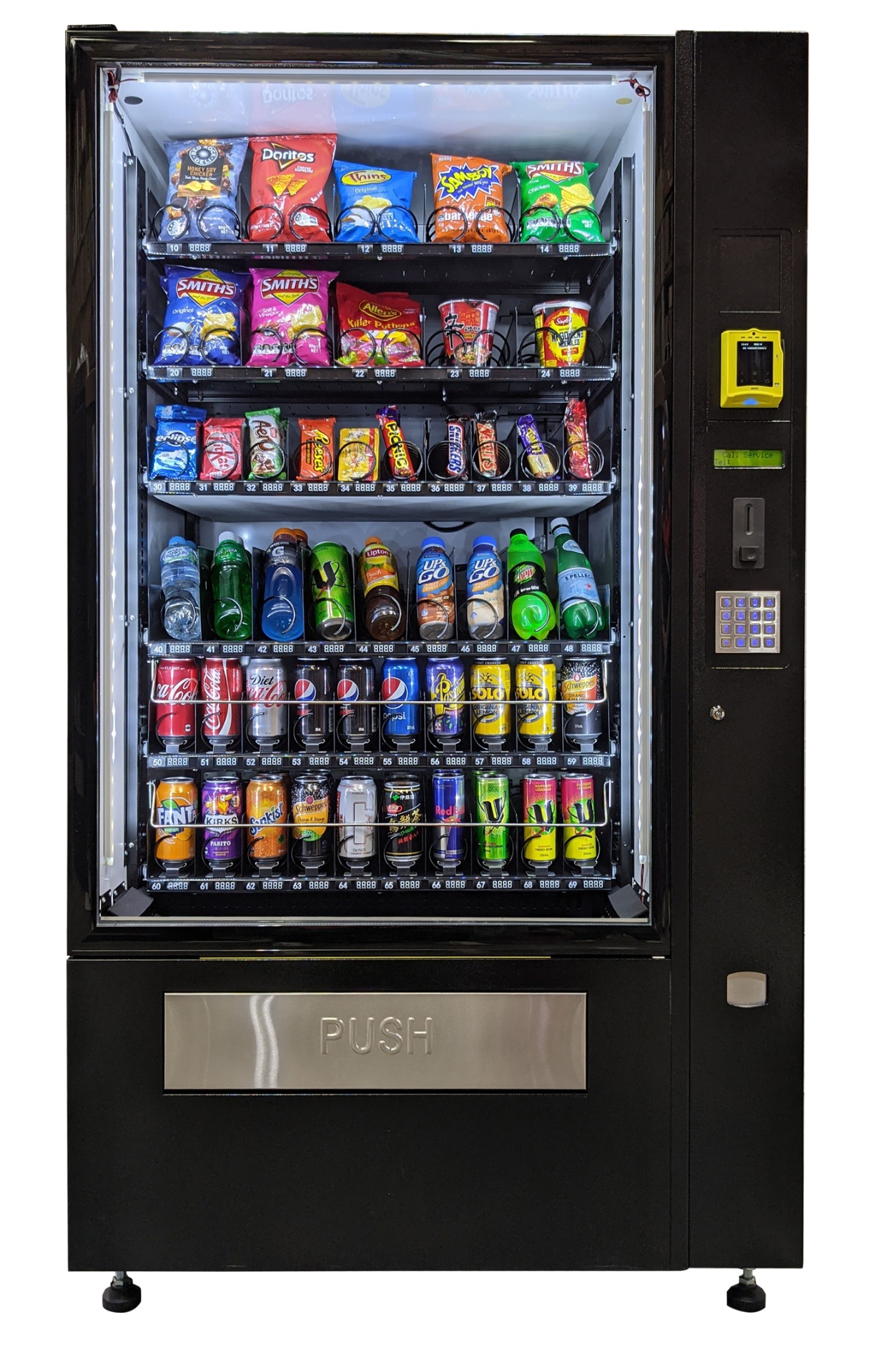
CV5 combo — high-capacity site machine
1200mm wide · 1830mm high · 880mm deep
- Best for 90+ staff, 24/7 shift sites, warehouses and gyms
- Up to 60 selections — the widest range we can put on one footprint
- Reinforced glass and hardened electronics for industrial floors
- Twin-bank refrigeration keeps drinks cold through summer peaks
FAQ
Frequently asked questions
How long should a page title be?+
Aim for 50 to 60 characters. Google cuts titles at about 580 pixels, so keep the service and suburb at the start.
Can I create a Google Business listing for every suburb?+
No. Google allows one listing per real business location. Use one service-area profile that lists the suburbs you cover.
How many words should a suburb page have?+
Enough to be genuinely useful. Our standard is at least 990 words of local, non-repeated content per page.
Which backlinks matter most for local vending?+
Local chambers of commerce, industrial estate associations, customer case studies, suppliers and local community sponsorships.
Grow your local presence
Free guides on local SEO, vending costs, ROI and business planning.
Ready for a free vending machine at your workplace?
Two quick questions and you're on your way. No contract lock-ins, no hidden fees.