This page breaks that number down into its parts — purchase or lease, electricity, refrigeration servicing, payment terminal fees, stock and the staff hours nobody budgets for — and then compares it with a free placement, where the operator carries every one of those costs.
The aim is to give you a defensible figure to take to a manager, not a sales pitch. Where a range is given, it reflects what Australian suppliers and service agents typically charge; your own quotes will vary by machine size, refrigeration type and location.
Total cost of ownership: a plain definition
Total cost of ownership is the full cost of running a drink vending machine over its life, not just the purchase price. For a vending machine it includes the machine itself, delivery and install, electricity, refrigeration servicing and repairs, card terminal hardware and transaction fees, the wholesale cost of stock, stock shrinkage and expiry, and the labour hours spent buying, carrying and loading product.
The purchase price of a drink vending machine in Australia
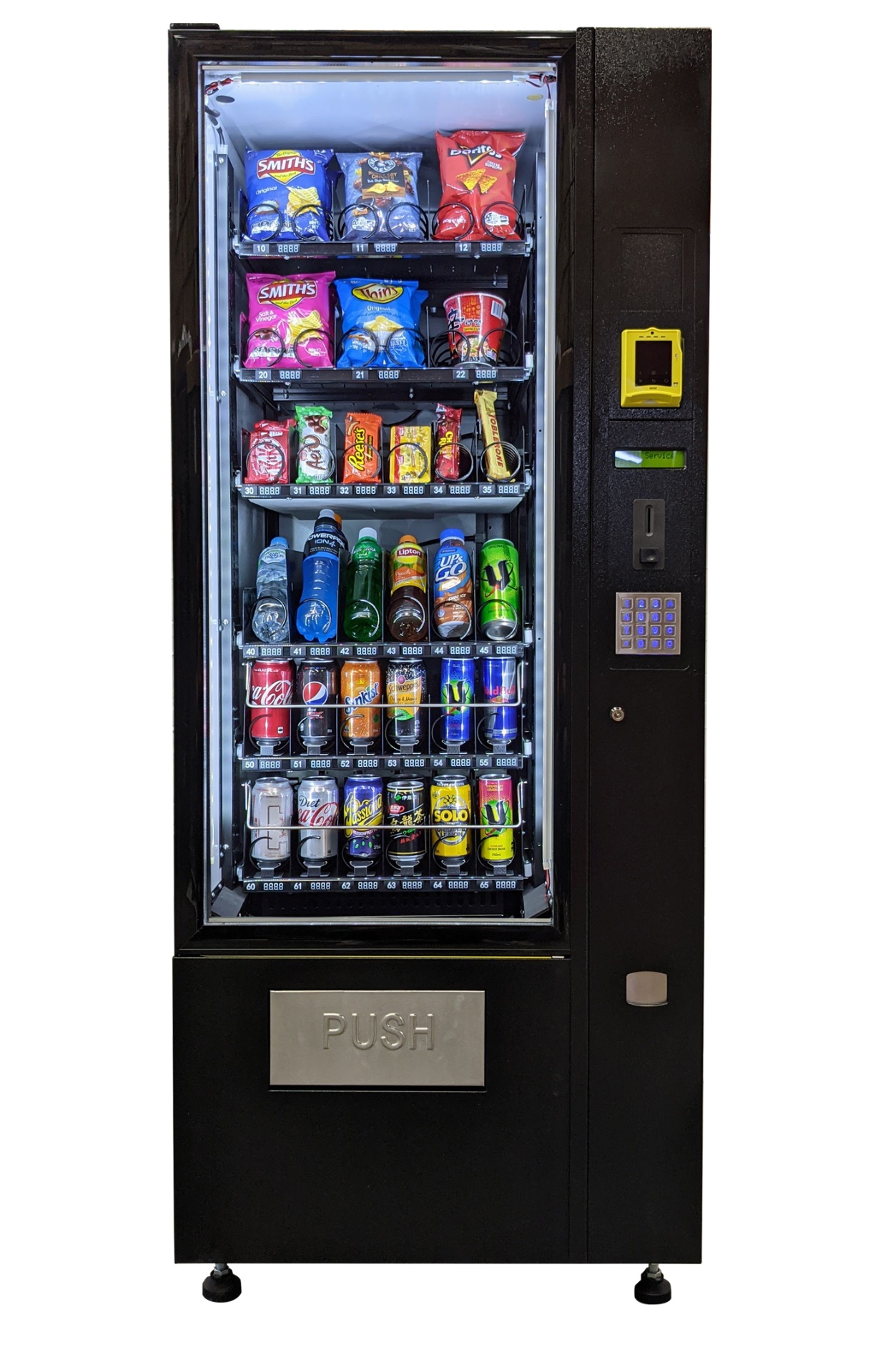
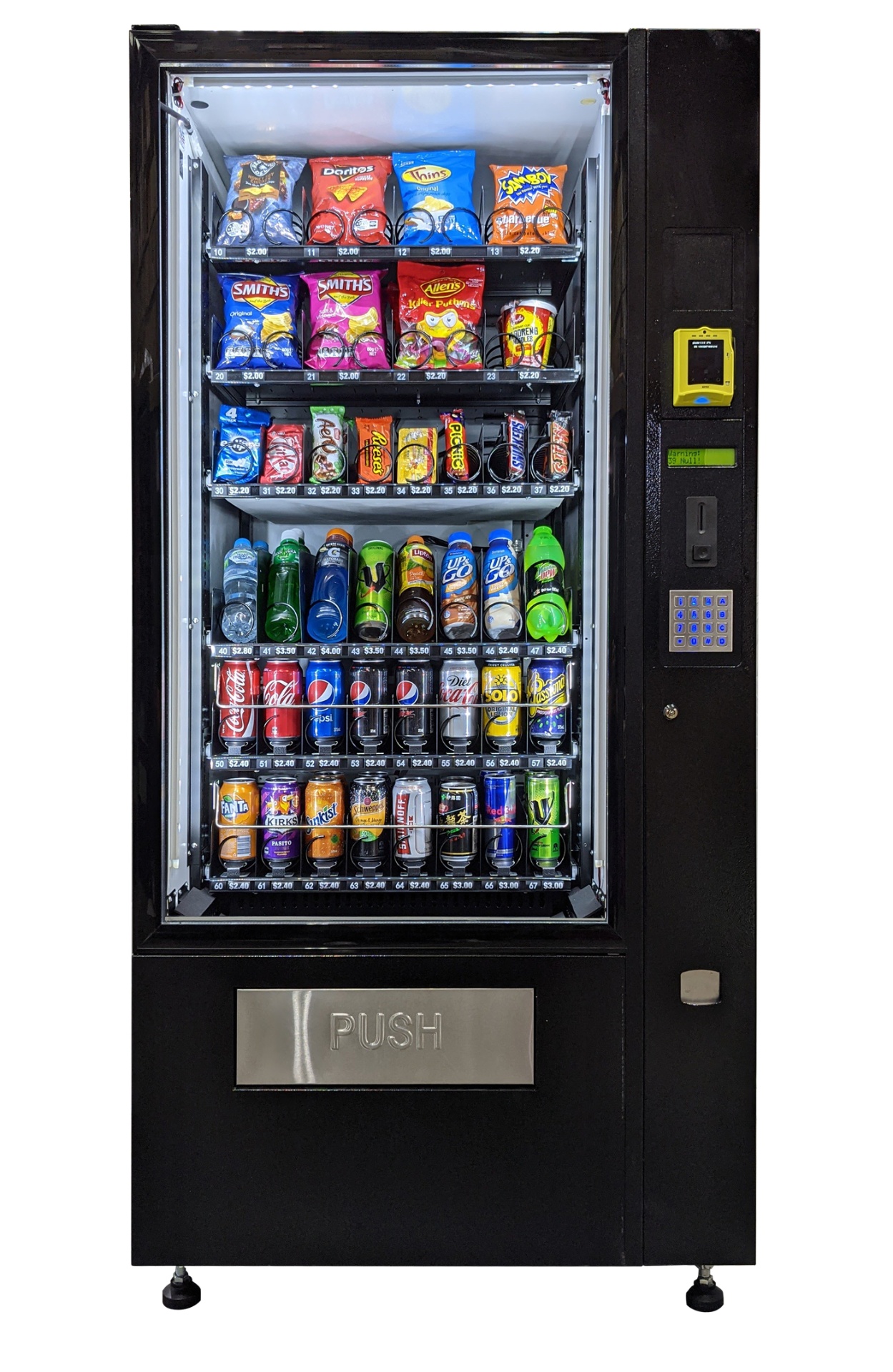
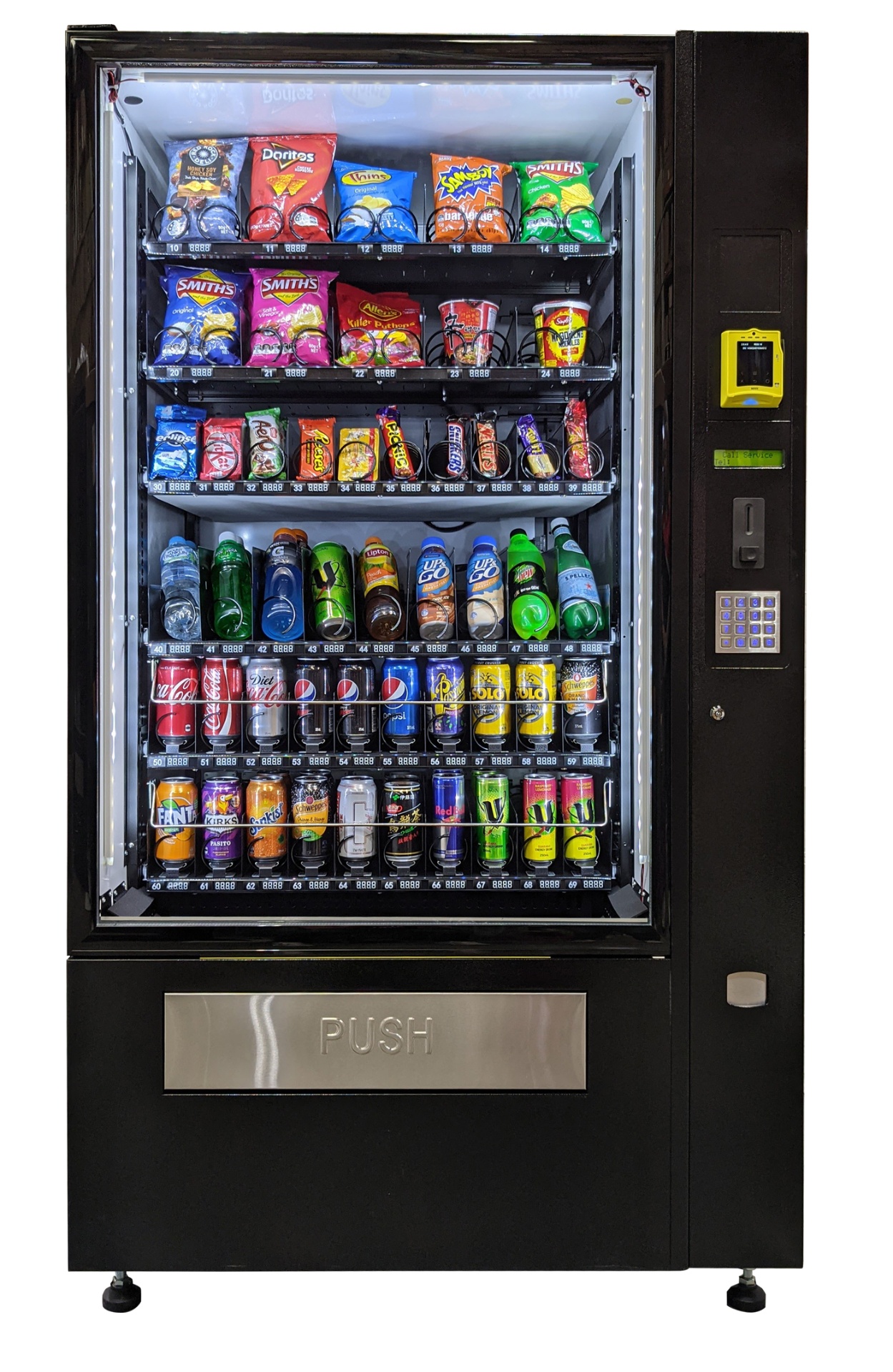
Buying outright is the largest single line. A compact refrigerated unit suitable for a small office starts around $4,000. A full-size glass-front drink machine with a modern controller, LED lighting and a tap-and-go reader typically lands between $7,000 and $12,000. Reconditioned machines sell for less, commonly $2,000 to $5,000, but arrive with an older compressor and a shorter remaining service life.
Delivery and install add several hundred dollars for a straightforward ground-floor placement and considerably more where stairs, a lift or a crane are involved. A machine weighs several hundred kilograms, so this is trade work rather than a two-person lift.
| Item | Typical range (AUD) |
|---|---|
| Compact refrigerated machine, new | $4,000 – $6,500 |
| Full-size glass-front drink machine, new | $7,000 – $12,000 |
| Reconditioned machine | $2,000 – $5,000 |
| Delivery and standard install | $300 – $900 |
| Difficult access install (stairs, crane, tight dock) | $900 – $2,500 |
| Card payment terminal hardware | $400 – $900 |
The running costs people forget to budget for
Ownership costs continue long after the machine arrives. Refrigeration is the main one: a compressor works hard in an Australian summer, and a service call for a sealed-system fault is a specialist trade visit. Card terminals carry a monthly connection fee plus a percentage of every transaction. Stock has to be bought at wholesale, transported, stored somewhere cool and rotated before expiry.
The cost that is almost never counted is labour. A machine serving 40 people needs restocking once or twice a week. Allowing an hour per visit for the shop run, the carry and the load, that is roughly six to eight hours a month of someone's time — and it is usually an office manager or a supervisor, not a casual.
| Cost | Typical annual range (AUD) |
|---|---|
| Electricity | $120 – $220 |
| Refrigeration servicing and repairs | $300 – $1,200 |
| Card terminal fees and transaction charges | $300 – $700 |
| Stock (wholesale, 40-person site) | $6,000 – $12,000 |
| Shrinkage, expiry and breakage | $200 – $600 |
| Staff labour, 6–8 hours a month | $3,000 – $5,000 |
Free drink machine, rented machine or bought machine — which is right
There are three ways an Australian business can put cold drinks in a lunchroom, and they suit different situations. Buying a drink machine outright means you own the asset and keep the margin, but you carry the purchase price, the refrigeration servicing, the stock buying, the shrinkage and the staff hours spent restocking. Renting means a fixed monthly fee whether the machine sells anything or not. A free placement means no capital, no fee and no labour, in exchange for the operator taking the product margin.
The rule of thumb is straightforward. If drink sales are part of your business model — a gym selling its own supplement line, a club with a bar, a retailer with margin targets — owning can make sense. If drinks are a staff amenity rather than a revenue line, a free placement is almost always the better outcome, because the hidden cost of self-operating is the staff time, not the machine.
| Free placement | Rented machine | Bought machine | |
|---|---|---|---|
| Up-front cost | $0 | $0–$500 setup | $4,000–$12,000+ |
| Ongoing fee | $0 | Monthly rental | Servicing and repairs |
| Who buys stock | Us | Usually you | You |
| Who restocks | Us | Usually you | You |
| Who repairs it | Us | Depends on contract | You |
| Who keeps product margin | Us | You | You |
| Staff hours required | None | Several hours a month | Several hours a month |
What a free placement costs instead
Under a free placement every line above except electricity moves to the operator. There is no purchase, no lease, no service contract, no stock purchasing and no staff labour. Your site keeps the amenity and gives up the product margin, which for most workplaces was never the point of having a machine.
| Item | Who pays | Cost to your site |
|---|---|---|
| Cold drink machine or smart cooler | FreeVendingMachines.au | $0 |
| Delivery and positioning | FreeVendingMachines.au | $0 |
| Installation and commissioning | FreeVendingMachines.au | $0 |
| Restocking and product supply | FreeVendingMachines.au | $0 |
| Cleaning, servicing, refrigeration repairs | FreeVendingMachines.au | $0 |
| Public liability and equipment insurance | FreeVendingMachines.au | $0 |
| Cashless payment terminal and fees | FreeVendingMachines.au | $0 |
| Electricity to run the machine | Your site | Roughly $2–$4 a week |
| Floor space (about 0.5 m²) and a power point | Your site | $0 |
When buying is the better decision
Buying makes sense when drink sales are a revenue line rather than an amenity. A gym selling its own supplement range, a club with retail margin targets, a caravan park charging holiday prices, or a very high-traffic site where the margin genuinely outweighs the labour — in those cases owning the machine and the margin is the right call, and the payback period on a purchase can be short.
For a typical office, warehouse, workshop or depot where drinks exist to keep staff on site and comfortable, the maths goes the other way. The labour line alone usually exceeds the product margin, which is why free placements have become the default in Australian workplace vending.
How to check this offer is genuine before you commit
A free machine sounds like it must have a catch, so it is reasonable to verify the offer before you sign anything. There is no lock-in contract, no rental line, no minimum spend and no exit fee. The program is funded entirely by product sales through the machine, which is why the placement has to make sense for both sides before we install.
Everything we claim is checkable. You can call the number on this page and speak to the person who will run your install. You can ask for the certificate of currency for our public liability cover before the machine arrives. You can ask for the names of comparable sites in your area and what their machine actually turns over. And you can end the arrangement and have the machine removed at no cost if it is not working for you.
- No contract, no rental, no minimum spend, no exit fee
- Certificate of currency for public liability provided on request
- Machine removed free of charge if the site changes its mind
- One named contact for your site, reachable by phone on 0401 662 678