The Mackay vending market
Mackay's economy is built on servicing other people's mines. Paget alone holds hundreds of heavy engineering, hydraulics, labour hire, tyre, electrical and rebuild businesses whose customers are coal operations four hours west, and the rhythm of those businesses follows the Basin, not the town. Add the sugar mills at Racecourse and Farleigh, the port and bulk handling at Mackay Harbour, and the professional layer along Sydney Street and Nebo Road, and you get a workforce that clocks on at 5am, works through a shutdown fortnight when headcount doubles, and finishes long after the last café closes. Almost every one of those sheds has a kettle, a fridge and nothing else.
Mackay precincts beyond Paget
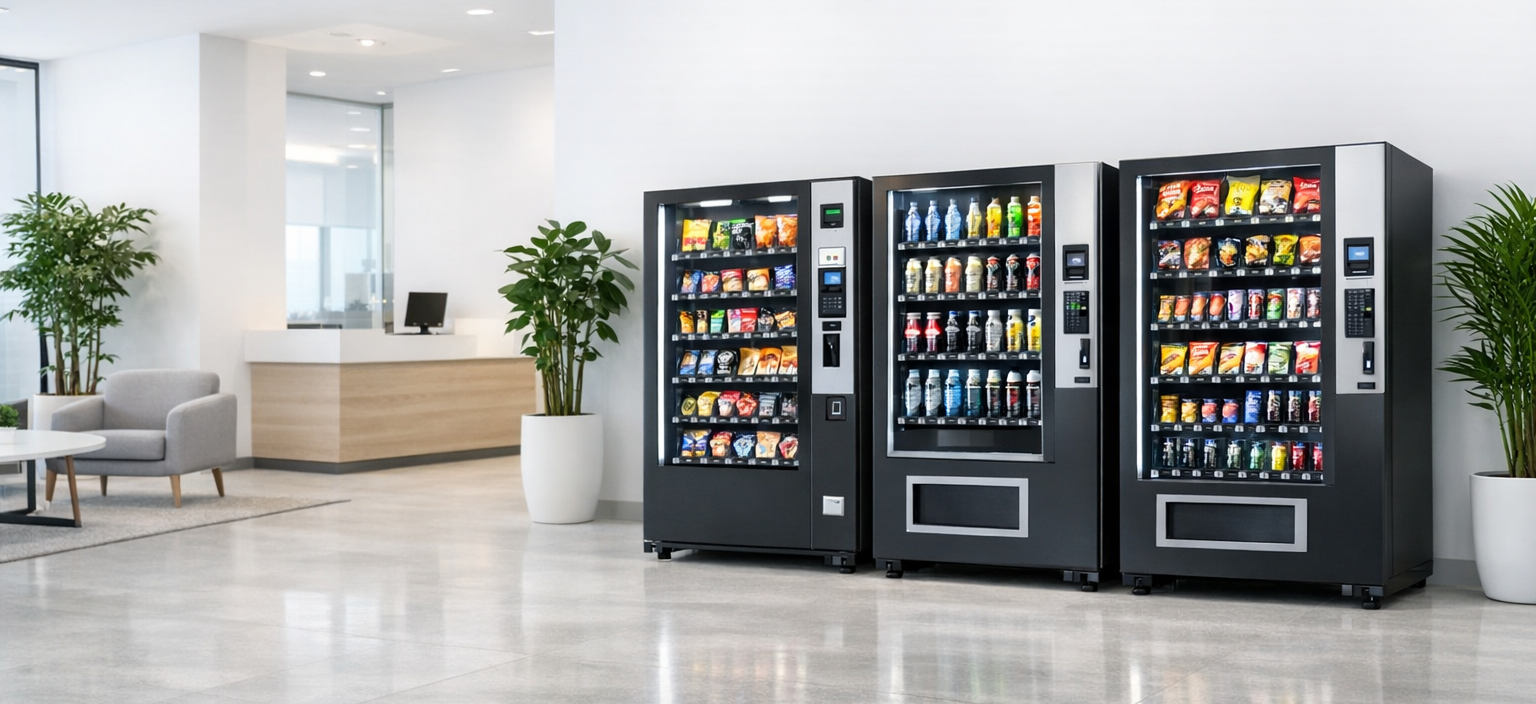
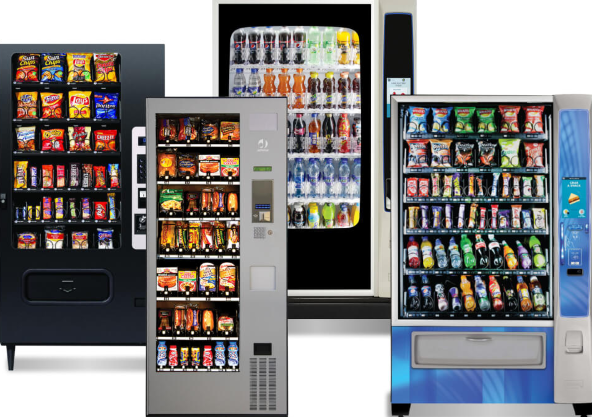
Paget gets the attention, but Mackay's workplace demand spreads wider. The Harbour and port-side industrial land carries bulk handling, marine services and engineering firms. Glenella and Mount Pleasant hold trade suppliers, vehicle dealers and service centres whose workshop staff and sales floors keep very different hours. The CBD and Sydney Street precinct carry mining services offices, engineering consultancies and government agencies. The sugar mills and their contractors around Racecourse, Farleigh and Marian run a crushing season from roughly June to November when headcount and hours both climb. Each of these needs a different stocking plan. A Paget rebuild shop wants cold water, electrolytes, energy drinks and filling hot-food options for twelve-hour days. A Glenella dealership wants a tidy front-of-house machine with water, coffee and snacks for customers waiting on a service. A CBD office wants lighter lines and better coffee. Because Mackay is a regional service run, units carry deeper stock between visits, and remote reporting lets the driver pre-pick exactly what is selling. During crushing season and Bowen Basin shutdowns we lift visit frequency for the window and drop back afterwards, at no cost to the host.
The Paget problem, in detail
Paget is one of the largest industrial estates in regional Australia and it is almost entirely light industrial land — hundreds of sheds, very few food outlets, and estate roads that make a quick trip anything but quick. A hydraulics shop with fifty staff, a rebuild workshop with eighty and a labour hire depot cycling contractors through daily all face the same thing at 9:30am: the crew disperses, vehicles leave the yard, and the job stops for the length of a Nebo Road queue. A machine in the crib room removes the whole sequence. It also removes vehicle movements from a yard where cranes and forklifts are working, which is a safety argument as much as a wage one.
Shutdowns and the amenity that never scaled
Bowen Basin turnarounds define the Mackay year. When a shutdown lands, a contractor's headcount can double or triple for a fortnight, and the crib room built for the permanent crew is suddenly feeding a small workforce. Most vending arrangements fail exactly here: the machine empties on day two and nobody comes back until the scheduled visit. We plan around published turnaround calendars, lift both stock depth and visit frequency for the window, and drop back afterwards. The host business pays nothing different, because the host business pays nothing at all.
Heat, hydration and the tropical service reality
Mackay's wet season combines heat with humidity that makes physical work draining well before midday, and the practical consequence is that hydration lines move far faster than confectionery. Machines here are stocked with chilled water, electrolyte drinks and larger-format cold drinks as core lines rather than afterthoughts, and telemetry alerts us when those columns run down mid-cycle so we can bring a mid-week drop rather than leave a shed dry. Refrigeration is monitored remotely too — in this climate a failed compressor is not a minor inconvenience, so we treat a temperature alert as a same-run callout rather than something to catch next visit.