The Bundaberg vending market
Bundaberg's employment sits in packing sheds, food processing plants, engineering workshops and the transport operations that move produce out of the Wide Bay. Crush season and harvest windows change the picture completely: a shed that runs twenty staff in the quiet months can carry a hundred through the peak, much of it casual and much of it starting before dawn. Those sites are typically on rural or estate roads — Kensington, Svensson Heights, the Bundaberg Port precinct at Burnett Heads — where the nearest shop is a drive across town. Amenity is usually an urn and a shared fridge, which is not much for a hundred people on a fourteen-hour packing day.
Bundaberg sites and seasonal headcount
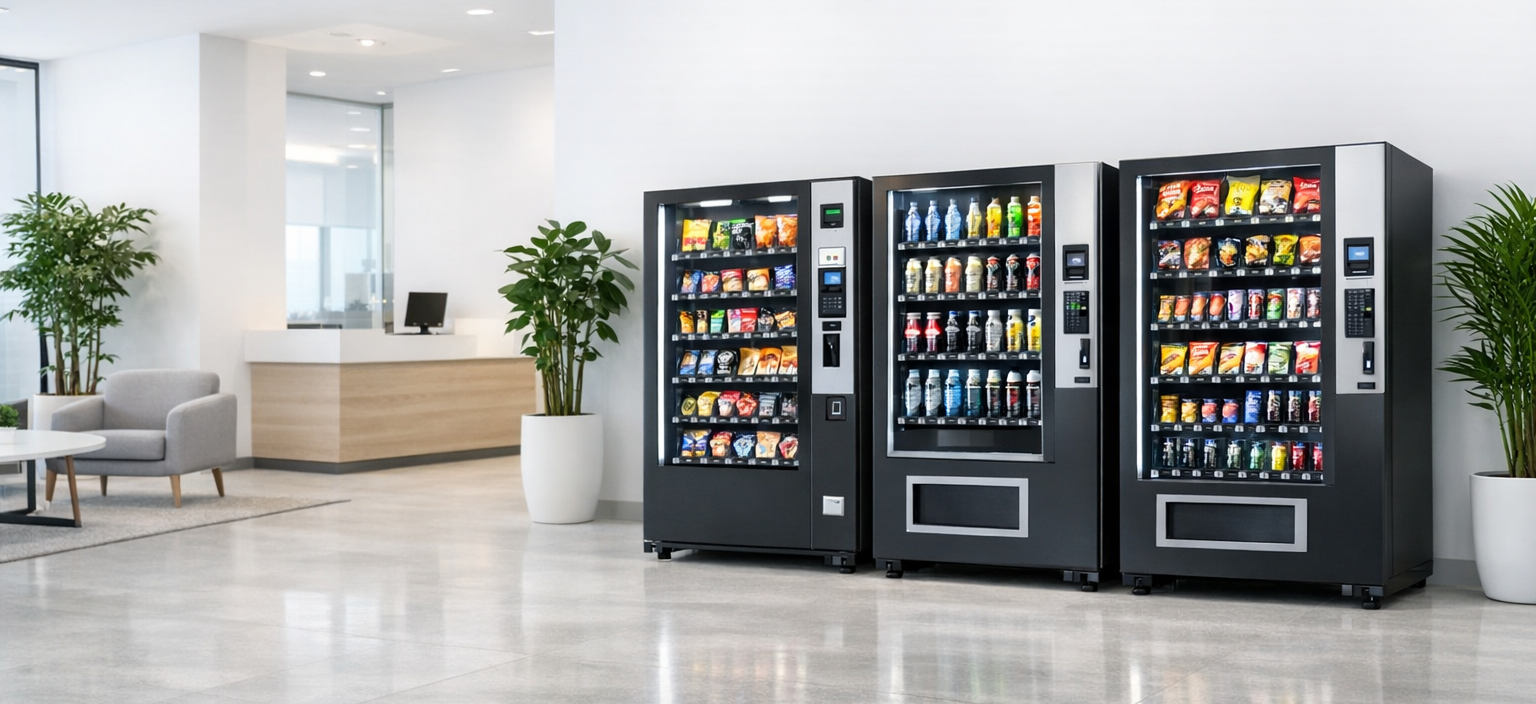
Bundaberg's workplace demand follows its industries. The sugar mills, distillery and food processors around Millbank, Bundaberg East and the port carry seasonal workforces that swell during crushing and harvest. The horticulture belt out toward Bargara, Qunaba and the Childers road holds packing sheds, cold stores and growers whose crews start at first light and finish when the fruit is packed. The industrial estates at Svensson Heights and along Enterprise Street hold engineering, transport and trade businesses, and the CBD around Bourbong Street carries offices, clinics and council services. Packing sheds need cold water and electrolytes above everything else, plus quick food for short breaks. Engineering and transport workshops want large drinks, energy drinks and filling snacks. Offices want coffee and lighter lines. We set each machine from a site visit and refine it from live sales, and during peak harvest and crushing we lift visit frequency so the machine keeps pace with a bigger crew, then return to the normal schedule afterwards. Payment is card and phone only. Installation, stock, servicing, repairs and pick-up are covered by us, so the business gets staff amenity without a rental line or service invoice. If the seasonal crew moves to a different shed or block, we can relocate the machine with them at no charge, and we remove it entirely at the end of the agreement without any exit fee.
Designing around a seasonal workforce
Bundaberg's peaks are severe and predictable. A packing shed or processing site that runs a small permanent team through winter can be feeding a hundred casuals through the harvest window, on fourteen-hour days, with early starts and weekend running. The failure mode for vending in that environment is obvious: a machine sized for the quiet season is empty by mid-morning in the peak. We treat your season as the planning input, lift depth and visit frequency for the window, and scale back afterwards. Since nothing is charged to the host at any point, there is no commercial reason to hold a machine at the wrong size.
What long packing days do to break time
On a fourteen-hour day, the break is not a luxury — it is the thing keeping the line accurate through the back half of the shift. When there is nothing on site, people either skip it or drive out for twenty minutes, and on a shed with a hundred casuals both outcomes cost money. Skipped breaks produce errors and fatigue claims; drives produce a line running short-handed. Putting substantial food and cold drink inside the fence is a small change that shows up in throughput, and in a harvest labour market where crews compare employers, it is also one of the cheaper retention signals available.
Food-site placement and hygiene practicalities
Machines never go into production areas. They go in the crib room, amenities block or covered break area, positioned so cleaning and pest control routines are unaffected, and servicing is scheduled around your food safety requirements rather than our convenience. Our crew follows your access rules, signs in like any other visitor, and works to whatever PPE standard the site sets. The physical requirements are minimal — level ground, a standard power point, mobile signal for telemetry — and everything else, including refrigeration repairs and the eventual removal, sits with us.