Can a machine go into a Singleton workshop rather than an office?+
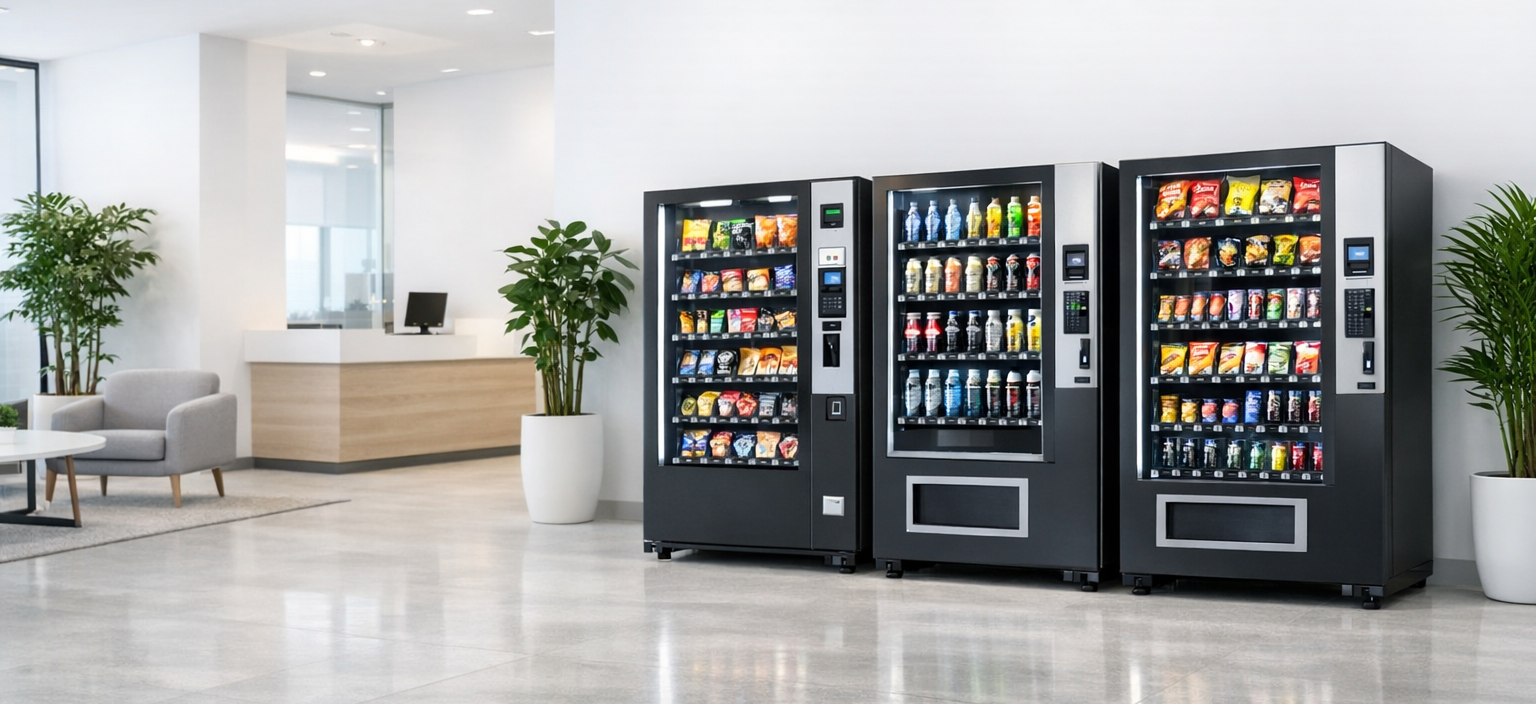
Yes, and most of our Hunter placements are exactly that. The unit sits in the crib room or lunchroom on a level slab clear of forklift paths, on a standard 10-amp outlet. Workshop-rated units handle dust and vibration, and refrigeration is specified for an unairconditioned shed rather than a foyer.
How often is a Singleton machine restocked?+
On the Hunter Valley cycle, with the interval set by actual telemetry rather than a fixed calendar. Fast-moving sites are visited more often, and stock depth is increased so the machine never runs down between visits during a busy shutdown period.
Do you place machines at sites with restricted or inducted access?+
Yes. Our servicing crew completes site inductions where required and books access windows in advance. Certificates of currency, safe work method statements and product liability documentation are provided as a pack before the first delivery.
Is there any charge if we ask you to remove the machine?+
None. Removal is free and there is no minimum term, exit fee or penalty. If a Singleton site doesn't support the machine, we first review the product range — weak sales are usually a range issue — and if it still isn't right we collect it at our cost.
Will we be charged anything at all?+
No. Nothing. There is no rental fee, no delivery fee, no installation fee, no service call-out fee, no restocking fee and no removal fee. You are not invoiced by us at any point. The program is funded by the margin on products sold from the machine, so the only money that changes hands is a staff member tapping their card for a drink.
What insurance cover is in place?+
We carry $20 million public liability cover, plus product liability on everything stocked in the machine. The machine itself is our asset and is insured by us. Your business is not asked to extend its own policy, add us as an interested party, or accept liability for the unit. Certificates of currency are issued on request and are routinely accepted by government, defence, health and tier-one construction procurement teams.
What happens if the machine doesn't sell enough?+
First we fix the product mix — nine times out of ten weak sales are a range problem, not a site problem, and a two-week mix review turns it around. If a site genuinely can't support a machine, we remove it at no cost to you and there is no exit fee, no minimum-term penalty and no invoice. You are never left paying for a machine that underperformed.
Is there a lock-in contract?+
No minimum term and no lock-in. The site agreement is a one-page placement document covering power, access and positioning. Either side can end it with reasonable notice, and we collect the machine at our cost.
How is the machine paid for by staff?+
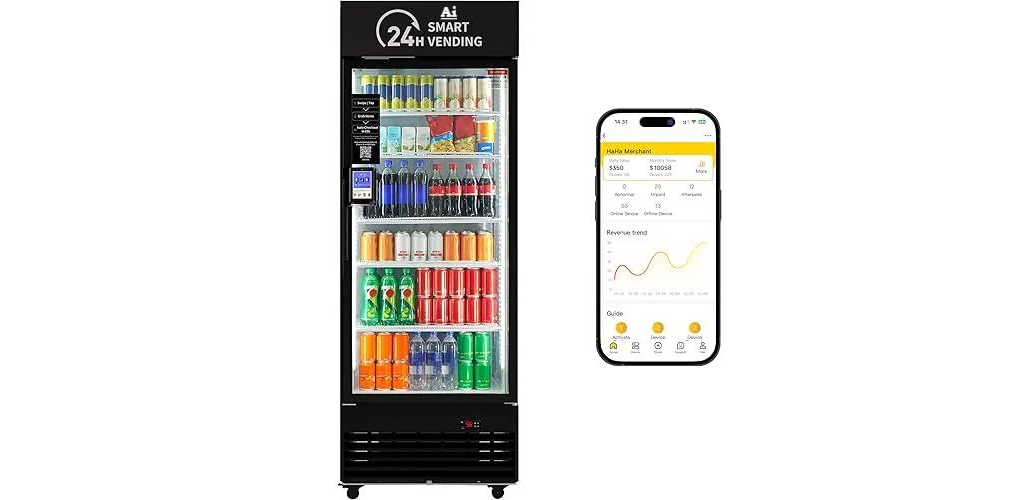
Cashless only — tap card, phone or watch. No coins, so no coin jams, no float, no cash on site and nothing for anyone to break into. Card surcharges are absorbed, not passed on.