Earnings & viability

The most common questions about vending machine earnings

The honest version of the numbers: what a workplace machine turns over, the point at which a site becomes viable, and what actually happens if yours doesn't get there.

The most common questions about vending machine earnings — free workplace vending machines Australia
$0 Delivery
$0 Installation
$0 Maintenance
$0 Insurances
$0 Restocking

The short answer

A workplace vending machine in Australia typically turns over $3–$8 per on-site person per week. A site with around 30 daily on-site people is the working viability threshold; 60+ makes it comfortable, and 150+ often justifies a second machine. If a site sells below that, we fix the product mix first — most underperformance is a range problem, not a site problem — and only remove the machine as a last resort, at no cost and with no invoice to you.

Last reviewed 5 August 2026

Will a machine in an office earn enough to stay?

Usually yes, if roughly 30 or more people are on site on a typical day and the machine is placed where they already walk. Office sites are among the most predictable performers we run, because consumption follows a reliable daily rhythm — mid-morning, post-lunch, mid-afternoon.

The variable that decides it isn't headcount alone, it's headcount multiplied by time on site. Forty people who are at their desks all day will out-sell eighty people who are out on client visits from 10am. A call centre, a claims team, a design studio or a laboratory are all excellent office sites. A field-sales office with a hot-desk floor is a much harder one, even with the same nominal staff number.

Placement is the second-biggest factor and the one most often got wrong. A machine in the kitchen or breakout area — somewhere people already go — will typically out-sell an identical machine in a corridor or a back-of-house area by a wide margin. We advise on placement at the site check for exactly this reason.

Daily on-site peopleTypical weekly turnoverViability
Under 20Under $60Generally too thin for a standalone machine — ask about a smaller footprint or a shared-building placement
20–30$60–$150Marginal. Workable with all-day on-site staff and a good placement
30–60$120–$350The standard viable office site
60–150$250–$900Comfortable. Often supports a wider range or a second unit
150+$700+Typically justifies a drinks machine and a snack or combo machine

Indicative ranges based on typical Australian workplace consumption of $3–$8 per on-site person per week. Actual results vary with site type, shift pattern, climate and placement.
What happens if sales are poor?

We fix the product mix before we do anything else, because nine times out of ten weak sales are a range problem rather than a site problem. You are never invoiced for an underperforming machine at any stage.

Telemetry tells us exactly which lines are moving and which are sitting. A site stocked with a generic national planogram will often underperform badly and then transform once the range matches the workforce — more protein and hydration on a physical site, more low-sugar and better coffee in a professional office, larger portions and hot-food-adjacent snacks on a night-shift site.

If the mix review doesn't lift it, we look at placement, then at pricing, then at machine type. Only when all of that has been tried and the site genuinely can't sustain a machine do we collect it. That removal is free, there's no exit fee, no minimum-term penalty and no final invoice. The commercial risk of an underperforming site is ours — that's the deal.

  • Step 1 — product mix review against telemetry data (usually resolves it)
  • Step 2 — placement change, at no cost, if the machine is in the wrong spot
  • Step 3 — price and portion adjustment on slow lines
  • Step 4 — machine type or size change
  • Step 5 — free removal, no fee, no invoice, no penalty

Can we earn commission from the machine?

Commission is available on higher-performing sites, but it is worth understanding the trade-off: commission comes out of the same product margin that funds the free service, so it is best suited to sites with strong, proven turnover.

For most workplaces the better return isn't commission — it's the amenity and the recovered staff time, both of which are worth more than a small percentage of snack sales. Where commission does make sense is high-traffic sites: large distribution centres, big gyms, busy public-facing venues and sites with hundreds of daily users.

Some hosts prefer to take the value as a staff benefit instead — subsidised pricing on selected lines, or a periodic staff-shout arrangement. That often lands better internally than a commission cheque nobody sees.

How do you calculate what a site will do?

Multiply daily on-site people by an expected spend per person per week, adjust for time-on-site, shift coverage, climate and the availability of nearby alternatives. Our earnings calculator does exactly that.

The biggest positive adjustments are: staff on site all day rather than in and out, shift work extending the trading window beyond business hours, hot climate or physical work driving drink volume, and no food retail within walking distance. The biggest negative adjustments are: a café or supermarket next door, a generous free-snacks kitchen already in place, heavy hybrid working, and part-day occupancy.

  • Baseline: $3–$8 per on-site person per week
  • Uplift for 24/7 or multi-shift operation
  • Uplift for hot climate, outdoor or physical work
  • Uplift where there is no food retail within walking distance
  • Downward adjustment for hybrid working and part-day occupancy
  • Downward adjustment where a subsidised kitchen or on-site café exists

What lifts a machine's sales fastest?

Placement, range and visibility — in that order. A machine moved from a back corridor into the lunchroom will routinely double its turnover with no other change.

  • Put it where people already go — kitchen, lunchroom, crib room, main breakout
  • Match the range to the workforce, not to a national average planogram
  • Make sure new starters know it's there — an induction line item is enough
  • Stock hydration heavily through summer on hot and physical sites
  • Keep a small number of premium lines — they lift average transaction value
  • Tell us what sells out; telemetry catches most of it, but site feedback is faster

Proof

Australian workplaces that said yes — and what changed

All case studies

Office · Barangaroo, NSW

Barangaroo pro-services firm — free combo machine on floor 34

  • 9 daysInstall lead time
  • $0Cost to the firm
  • 40–60Transactions/day

Booking the dock and getting building management to approve a vendor is usually painful. This crew handled all of it — the machine appeared, plugged in, and the staff just started using it.

Read the write-up

Warehouse · Truganina, VIC

Truganina distribution centre — 24/7 vending for a 3-shift operation

  • 11 daysInstall (2 machines)
  • 24/7Availability
  • 3 shiftsServiced

Night shift was tapping vending machines in the servo across the road. Now they don't leave the site. It's paid for itself in productivity in the first month — and we paid nothing for it.

Read the write-up

Gym · Fortitude Valley, QLD

Fortitude Valley 24/7 gym — recovery drinks + protein bars at $0 cost

  • 7 daysInstall lead time
  • $0Owner outlay
  • +$6Avg member spend / visit

I'd been quoted $8k for a machine that I'd have to stock and fix. This one turned up free, gets stocked automatically, and I get a monthly line item as revenue not a cost. No brainer.

Read the write-up
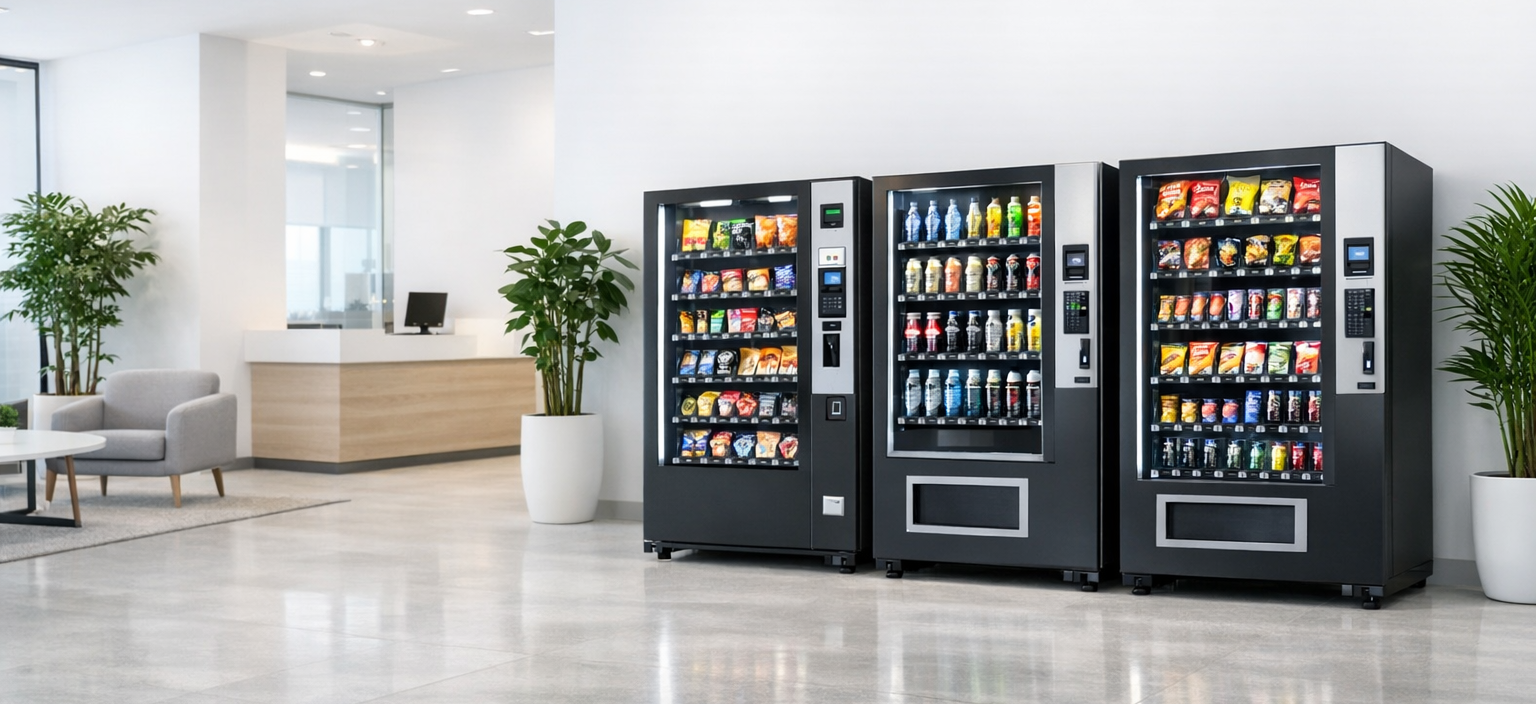
Free snack and drink vending machine installed in an Australian corporate office lobby
Corporate lobby install — snack and cold-drink combo, $0 to the host site.
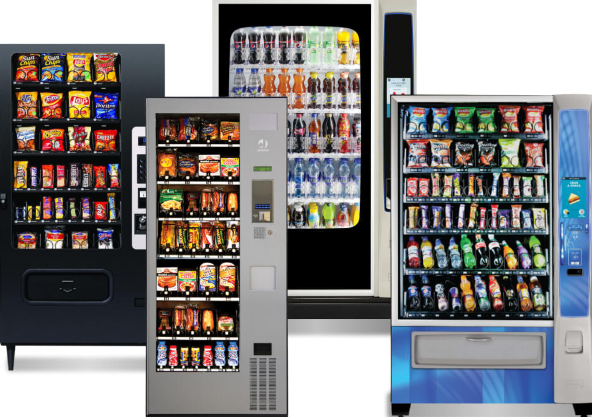
Line-up of four free workplace vending machines: snack, drink, combination and coffee
The four configurations we install: snack, drink, combination and coffee.
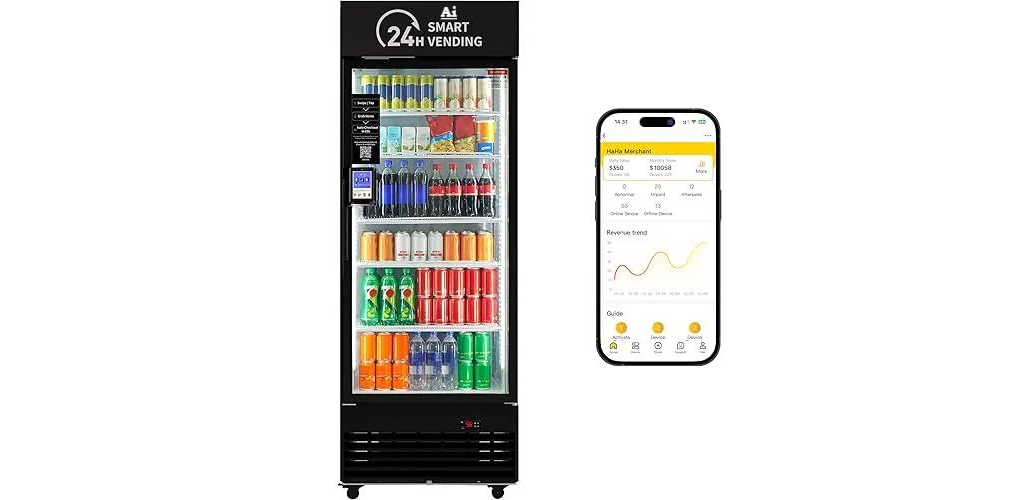
Telemetry-monitored smart fridge vending machine restocked automatically at an Australian workplace
Telemetry-monitored smart fridge — restocks are triggered before it runs dry.

Free download

The Free Workplace Vending Guide (2026, Australia)

A 20-page plain-English guide: what vending actually costs in Australia, how the $0 placement model is funded, the $20 million insurance position, what makes a site viable, and the exact questions to ask any vending supplier before you sign. No cost, no obligation, no sales call unless you ask for one.

We never sell or share your details. Unsubscribe any time.

FAQ

Related questions

Will a free vending machine in an office earn enough to stay?+

In most offices with around 30 or more people on site daily, yes. Australian workplace machines typically turn over $3–$8 per on-site person per week, so a 40-person office generally sits comfortably above the viability line — especially where staff are on site all day and the machine is placed in the kitchen or breakout area.

How much does a vending machine make per week in Australia?+

A workplace machine typically turns over $3–$8 per on-site person per week. That's roughly $120–$350 a week at a 40-person site and $250–$900 at a 100-person site, varying with shift pattern, climate, placement and nearby alternatives.

What's the minimum number of staff for a free vending machine?+

About 30 people on site on a typical day is the working threshold for a standalone machine. Below that, all-day occupancy and a good placement can still make it work, and we can look at a smaller-footprint unit or a shared-building placement in multi-tenant sites.

Will the machine be removed if sales are low?+

Only as a last resort, and only at no cost to you. We review the product mix first (which usually fixes it), then placement, then pricing and machine type. If the site genuinely can't sustain a machine we collect it free — no exit fee, no penalty, no invoice.

Do we get charged if the machine underperforms?+

No. Never. The commercial risk of an underperforming site sits entirely with us. There is no shortfall charge, no minimum-sales clause and no invoice at any point.

Can we earn commission on vending sales?+

On higher-turnover sites, yes. Commission comes out of the same product margin that funds the free service, so it suits large distribution centres, big gyms and high-traffic public venues better than a small office. Many hosts prefer to take the value as subsidised staff pricing instead.

Does hybrid working kill vending viability?+

It reduces it but rarely kills it. What matters is people actually on site on a given day, not headcount on the payroll. A 100-person office at 50% attendance behaves like a 50-person office — still comfortably viable.

What's the single biggest thing that lifts vending sales?+

Placement. Moving a machine from a back corridor to the lunchroom or crib room routinely doubles turnover with no other change. Range comes second, and it's the fastest thing to fix once telemetry shows what's moving.

Ready for a free vending machine at your workplace?

Two quick questions and you're on your way. No contract lock-ins, no hidden fees.

0401 662 678