Published 7 September 2026 · 2017 words · cashless vending machine australia
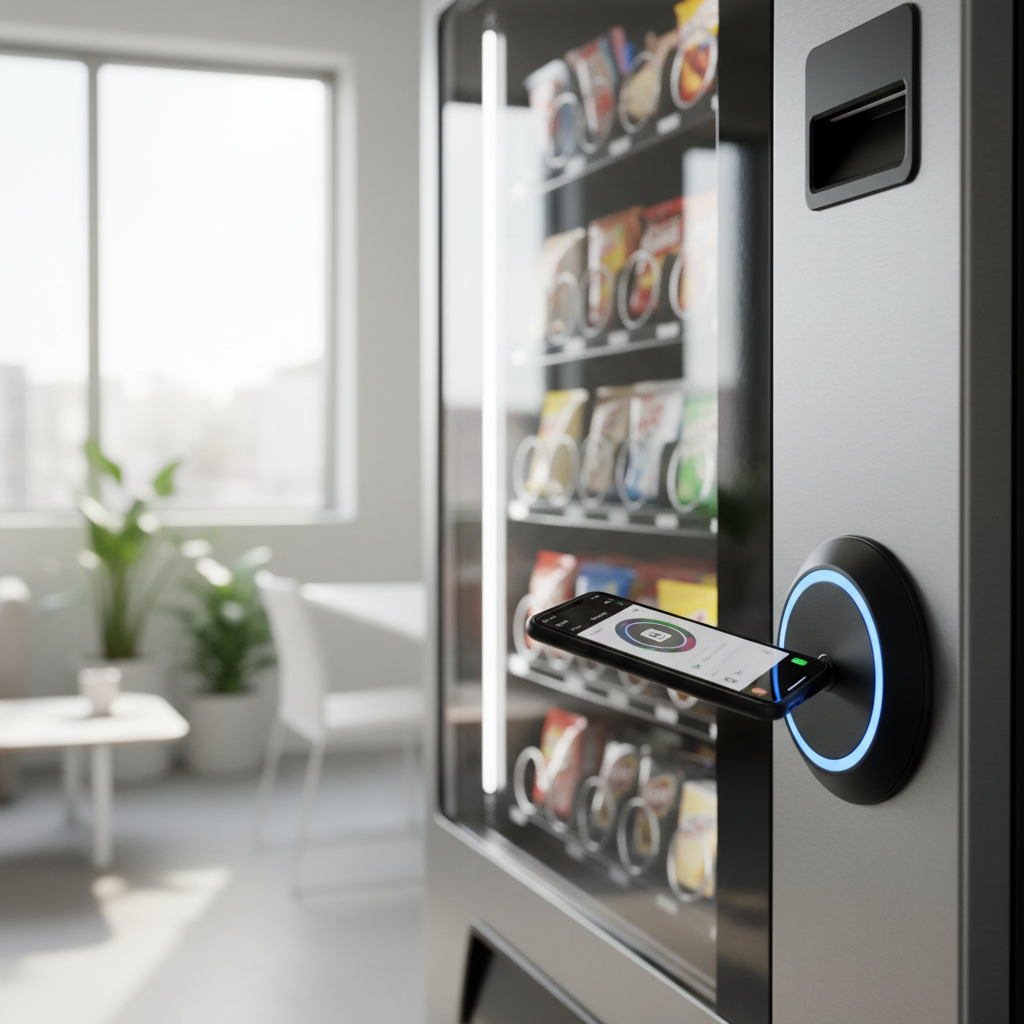
In today’s Australia, tapping a card or phone to pay is second nature. We do it for our morning flat white, our groceries, and our train fare. So why should the workplace vending machine be any different? The days of scrounging for coins are over. The modern vending solution is smart, connected, and predominantly cashless. This transition isn't just about convenience; it represents a fundamental shift in how vending services operate, driven by powerful technology that benefits both the user and the business hosting the machine. This article unpacks the technology behind the cashless vending machine in Australia, from payment readers to telemetry, and explains what these changes mean for you as a host site.
Loading reads…0 shares
Key takeaways
- Cashless payments significantly increase sales and user convenience.
- Telemetry provides live data, enabling proactive restocking and maintenance.
- Modern machines accept a wide range of payment types, from cards to phones.
- The host's role remains simple: provide space, power, and access.
The Decline of the Coin Slot: Why Cashless is King
Australia has one of the highest rates of electronic payment adoption in the world. The simple act of carrying cash, particularly coins, is becoming increasingly uncommon. For a workplace amenity like a vending machine, this behavioural shift is critical. A machine that only accepts coins is no longer just an inconvenience; it's a barrier. When staff on a tight break can't make a purchase because they don't have the correct change, the machine fails in its primary purpose. Embracing cashless technology removes this barrier entirely, making snacks and drinks accessible to everyone, at any time.
For our free placement model to be sustainable, the machine needs to generate a consistent volume of sales. The single biggest factor in lifting sales is the introduction of a cashless payment system. It transforms a machine from an occasional-use item into a reliable, everyday convenience. This increase in transaction frequency is what makes it viable for us to place a premium, high-tech machine in your workplace at zero cost. By catering to modern payment habits, a cashless vending machine in Australia doesn't just satisfy staff; it underwrites the entire service model that allows us to offer it for free.
A Deep Dive into Payment Reader Technology
The heart of any modern cashless system is the payment reader itself. Gone are the clunky, aftermarket attachments of the past. Today's premium machines feature sleek, integrated readers designed for reliability and ease of use. These units are equipped with Near Field Communication (NFC) technology, enabling the 'tap-and-go' functionality that Australians are familiar with. They also support traditional chip (EMV) and magnetic stripe card insertions, ensuring compatibility with all card types. This hardware is built to be robust, handling thousands of transactions in busy environments from a Melbourne CBD office to a regional depot in the Hunter Valley.
This technology opens the door to a vast array of payment methods, ensuring no one is left out. The system seamlessly accepts all major credit and debit cards, including Visa, Mastercard, and American Express. Crucially, it also integrates with the digital wallets that are now a permanent feature on our smartphones and smartwatches. This means staff can pay using Apple Pay, Google Pay, or Samsung Pay, often without even needing to carry a physical wallet. All transactions are processed instantly and securely, providing a user experience that rivals any retail store.
The payment system is compliant with strict industry standards, ensuring every transaction is secure. Key features include:
End-to-end encryption to protect cardholder data.
Compliance with Payment Card Industry Data Security Standard (PCI DSS).
Secure processing through established Australian payment gateways.
- Visa, Mastercard & AMEX (Debit/Credit)
- NFC 'Tap-and-Go' payments
- Apple Pay
- Google Pay & Samsung Pay
- Chip (EMV) and swipe cards
Telemetry: The Brains Behind the Cashless Operation
While the payment reader is the public face of the technology, the real intelligence lies in the telemetry system. In simple terms, telemetry is a technology that allows us to remotely monitor and communicate with your vending machine in real-time. Each machine is fitted with a small device that acts like a dedicated mobile phone, transmitting operational data back to our central management system over a secure mobile network. This constant stream of information gives us a live dashboard showing the status of every machine we operate, anywhere in Australia.
This data transmission is the invisible link that makes the entire cashless system work. Every time a card is tapped, the transaction details are sent via the telemetry unit. But it records far more than just sales. It tells us about stock levels in every single column, the machine's internal temperature, and even alerts us to potential error codes or faults. This transforms the vending machine from a passive 'dumb box' into a smart, connected asset that we can manage proactively, ensuring it performs optimally for your staff.
How Telemetry Data Drives Restocking Efficiency
The most significant operational advantage of telemetry is the revolution it brings to inventory management and restocking. The traditional method involved a fixed service schedule—a restocker would visit a site every Tuesday, for example, regardless of how much stock had actually been sold. This approach was inherently inefficient, leading to some products being sold out for days while others sat untouched, and resulting in unnecessary site visits which could disrupt your workplace.
A telemetry-driven service is dynamic and intelligent. Our system constantly analyses sales data from your machine. Instead of a fixed schedule, a restock is automatically triggered when inventory levels for popular items hit a predetermined threshold. Our logistics team receives a detailed report showing exactly which products and quantities are needed. The restocker then arrives on-site at your Adelaide factory or Sydney office with the precise items required to fill the machine. This data-driven approach is the key to providing a truly seamless service.
This modern approach offers clear advantages:
**Old Method (Guesswork)**
- Fixed, scheduled visits (e.g., weekly)
- High chance of popular items selling out
- Unnecessary site visits causing disruption
- Stock for replenishment based on estimates
**New Method (Data-Driven)**
- Visits triggered by real-time sales data
- Maximised product availability
- Fewer, more efficient site visits
- Restocker arrives with the exact stock needed
- Eliminates stock-outs of popular items.
- Ensures maximum product freshness.
- Reduces unnecessary foot traffic and disruption at your site.
- Allows for dynamic adjustments to the product selection (planogram) based on real data.
What a Cashless System Means for Machine Hosts
For a business hosting one of our machines, the transition to a cashless system is overwhelmingly positive and requires no extra effort. The most immediate benefit is enhanced staff satisfaction. By providing a quick, reliable, and modern payment method, you are offering a genuinely useful workplace perk. There are no more frustrations over rejected coins, a lack of change, or being unable to make a purchase. It positions the amenity as a professional, seamless part of the work environment, reflecting positively on your company culture.
From a practical and contractual standpoint, your obligations remain exactly the same: simple and minimal. Your contribution is limited to providing a small amount of floor space and access to a standard power point. We handle every aspect of the technology, including the cost of the hardware, installation, data plans for the telemetry unit, and all associated bank and merchant fees. There are no hidden charges passed on to you. The cashless system simply allows us to provide a better, more reliable service under the same 100% no-cost agreement.
The Technical and Physical Footprint
A concern for many businesses is the potential impact on their space and utilities. A modern cashless vending machine is designed to be highly efficient and unobtrusive. The physical footprint is surprisingly small, typically requiring less than one square metre of floor space (e.g., 950mm wide x 850mm deep). For power, it simply plugs into a standard 240V, 10-amp wall socket. Thanks to superior insulation, LED lighting, and energy-saving modes, the power draw is minimal, often equating to only a few dollars per week—a tiny contribution for a major staff benefit.
A key technical detail that simplifies installation is that the machine's smart technology operates independently of your corporate IT infrastructure. You do not need to provide a Wi-Fi password or an ethernet port. Each telemetry unit is equipped with its own industrial-grade SIM card that connects to Australia's national 4G and 5G mobile networks. This creates a secure, firewalled data connection for all payment and telemetry information, ensuring there is zero risk or complication for your IT department. It’s a completely self-contained system.
Security and Reliability in a Connected System
Introducing any connected device into a workplace rightly raises questions about security. Our cashless payment systems are designed with this as a priority. All transaction data is encrypted from the moment a card is tapped, meaning sensitive information is never stored on the machine or transmitted in a readable format. The entire process adheres to the stringent Payment Card Industry Data Security Standard (PCI DSS). To provide complete assurance, our entire operation, including every machine we place, is covered by a $20 million public liability insurance policy.
Beyond financial security, we also ensure operational reliability. The telemetry system doesn't just report sales; it acts as a health monitor for the machine. It will alert our technicians to a temperature variance, a payment reader fault, or a connectivity issue, often before you or your staff are even aware of a problem. In areas with patchy mobile reception, such as a basement in Hobart or a remote site in NT, the systems have offline capabilities to queue transactions and process them once a connection is re-established, ensuring continuous service.
Want a machine like this at your site?
Delivery, install, service, restocking and $20 million public liability are all included at no cost. Tell us about your workplace and we will confirm eligibility.
Request a free vending machine