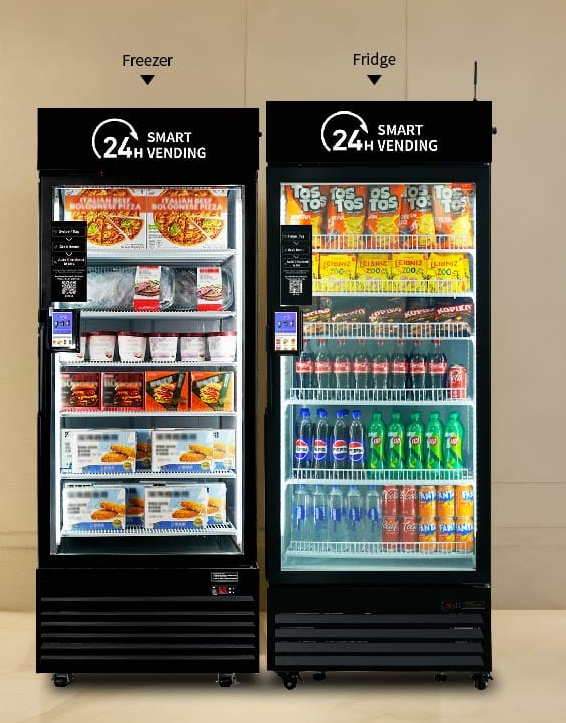
The restocking process for a smart fridge vending machine in Australia looks almost nothing like the old 'route driver with a clipboard' model. It's a data-first workflow that starts the moment a product leaves the shelf and ends with a compliance-logged temperature reading after the restock is finished. Here's how the whole loop works in 2026, step by step, for the operators running smart fridges across Australian workplaces.
- Step 1
NFC/AI sensors detect the sale
Load cells drop, camera vision confirms which SKU actually left.
- Step 2
Telemetry uploads via 4G
Encrypted packet with stock, temperature and faults every few minutes.
- Step 3
Restock alert triggered
Min-level breach flags the machine; urgent stock-outs escalate.
- Step 4
Service visit dispatched
Filler follows a route-optimised, pick-list-driven cold-chain run.
The whole restocking process condenses into this repeatable loop, executed hundreds of times a day across Australia.
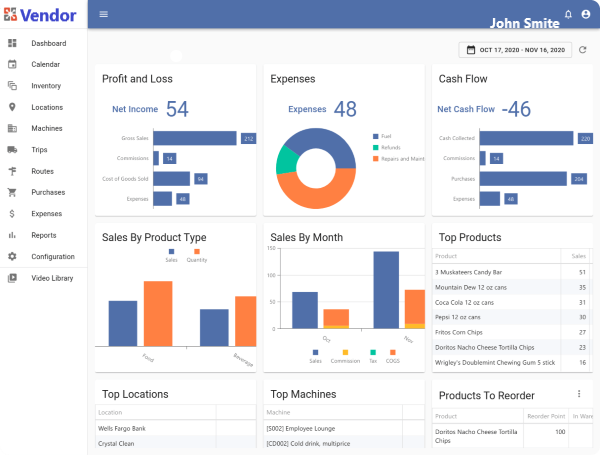
Step 1 — Sale event: shelf weight drops
A staff member taps their phone, the reader authorises the transaction, the door releases, they take a chicken wrap out of the second shelf, and the door swings closed. In under two seconds the load-cell under that shelf registers a weight drop equal to a single chicken wrap, and the control board increments the 'sold' counter for that lane. The camera above the door takes a before-open and after-close photo pair, and onboard vision confirms the SKU that actually left.
Step 2 — Telemetry upload to the back-office
Every few minutes, the machine's 4G router bundles all sales events, current stock levels, deck temperature, compressor status and any alarms into a single telemetry packet and uploads it to the operator's platform — typically Nayax Management Suite, Vendcell VPortal, or an equivalent. The upload is encrypted and averages under 5 KB — well inside a standard M2M SIM plan.
Step 3 — Automated par-level check
Every site in the fleet has its own par-level rule set. A busy warehouse smart fridge might have a par of 12 chicken wraps and a min-level of 4; a quieter office might sit at 6 and 2. When a SKU drops below its min-level, the back-office marks that machine for a restock run. If the SKU is at zero and it's a fast-mover, the system escalates the machine to 'urgent' so it lands on the next available route rather than the scheduled one.
Step 4 — Pick-list generation and route optimisation
The morning before each run, the platform generates a per-machine pick-list — exactly what SKUs to bring, in exactly what quantity, for each site on the route. A route-optimisation engine groups nearby machines into a single loop through the CBD and inner suburbs. The filler receives it as a mobile app job list. Nothing is guessed and nothing is over-picked, so the van goes out with less inventory than an old-school route would carry and returns almost empty.
Step 5 — On-site restock and cold-chain handling
On arrival, the filler scans the machine's QR code, which opens the machine's restock screen in the app with the current stock levels and the target par levels. Products are loaded from an insulated cold-chain trolley that has itself been temperature-logged from depot to door. After loading, the filler triggers a stock reset in the app, which resyncs the load-cell readings against the new inventory. The whole visit typically takes 8–12 minutes for a standard smart fridge.
Step 6 — Interior clean and date rotation
Every restock includes a wipe-down of the interior glass and shelves and a FIFO rotation of dated stock so the shortest-dated item is at the front. Any product within its date window but visibly damaged is pulled and logged as waste in the app. This is where the compliance layer starts to matter — waste, cleaning and temperature checks are recorded per visit, per machine, per filler.
Step 7 — Temperature log and compliance close-out
Before leaving, the filler confirms the deck temperature is back at target (typically 3 °C for a chilled smart fridge) and closes the job in the app. The compliance record for that visit — before/after stock counts, temperature at open and close, any waste, filler ID and timestamp — is stored against the machine indefinitely, so any food-safety audit or customer complaint can be traced to the visit that seeded the affected batch.
Step 8 — Machine back online with fresh sales data
Within minutes, the newly-stocked machine is uploading sales again. If a SKU that was heavily promoted turns out to underperform in this specific site, the platform notices within a week and the pick-list adjusts. That's the difference between a smart fridge and a coin-op snack unit — the machine keeps re-tuning itself to the actual site.
Australian food safety & compliance checklist
Every step above is executed against a food-safety baseline set by Food Standards 3.2.2 and state health authority guidance. Here's the checklist we run against on every smart fridge, every visit.
Zero-cost to the workplace
The whole workflow above is invisible to the host site. The workplace's involvement is limited to supplying floor space, power and a 4G-friendly location. Providers like Free Vending Machines Australia handle the entire restocking and cold-chain workflow at $0 to the host, funded by product margin at the point of sale.
Free quote
Get a smart fridge with AI restocking at $0 to the site
Full cold-chain handling, HACCP-style temperature logs, and pick-list-driven restocks — all covered. Two-question pre-qualifier below.
Next article
AI vending machine restocking — how it works in Australian workplaces
AI vending isn't a marketing badge — it's a demand-forecast engine that decides when a machine is restocked, what to load, and which SKUs to drop.
Read next →Related service
Request a smart fridge
$0 smart fridge on eligible Australian workplaces — full cold-chain handling included.
See service page →DavidB, VMA
Vending operator & technician
DavidB has 20+ years of hands-on experience across the Australian vending industry. He has configured, installed, removed and transported thousands of machines — from full site rollouts to the quick "pick-up-and-move" jobs that keep a site happy. Starting in repairs, he learned from some of the industry's longest-serving technicians, covering everything from lock changes and fridge decks to vend motors, control boards, coin mechs and note readers. He was also among the earliest installers of Australia's first telemetry systems, helping shape what operators actually need in the back end: product imaging, stock sales, re-ordering, route planning and even catching thieving fillers who did not know the machine was monitored. Later, he moved into supplier roles across note readers, coin acceptors, credit card readers and other cashless acceptance methods including QR code and RFID systems for specialised vending such as PPE machines.