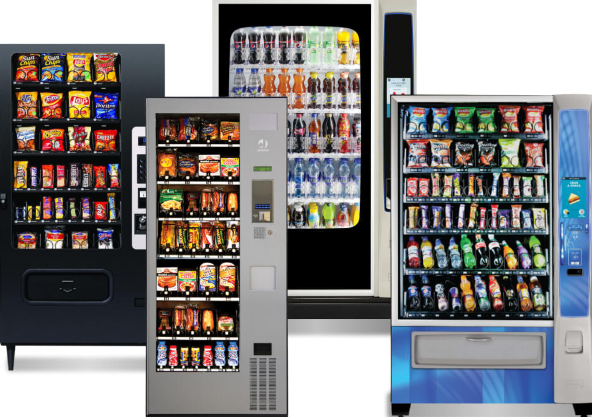
AI vending machine restocking works everywhere in Australia, but the workflow looks a little different depending on which city the machine is in. Density, traffic, building-access rules, and even weather patterns change how routes are built and how often a machine is refilled. Here's the honest city-by-city breakdown for Sydney, Melbourne, Brisbane, Perth and Adelaide office workplaces in 2026.
- Step 1
NFC/AI sensors detect the sale
Vision + weight cells confirm each SKU in real time.
- Step 2
Telemetry uploads via 4G
Encrypted 5 KB packets land in the back-office every few minutes.
- Step 3
Restock alert triggered
Per-site par-levels and forecast escalate machines automatically.
- Step 4
Service visit dispatched
Route optimiser groups the run; filler follows a per-machine pick-list.
Sydney, Melbourne, Brisbane, Perth and Adelaide all run on this AI restocking loop — only route density changes.
Sydney — highest density, tightest windows
Sydney CBD and inner suburbs (North Sydney, Chatswood, Parramatta, Macquarie Park) are the highest-density part of the fleet. AI restocks land inside tight loading-dock booking windows — typically before 9am or after 3pm — and the route-optimisation engine has to solve for building-access rules on top of stock levels. The upside is that machines can be restocked more frequently at lower cost per visit because the depot-to-door drive is short. Fresh food smart fridges in Sydney offices are typically refreshed 2–3 times a week.
See our dedicated coverage for Sydney offices and NSW-wide install.
Melbourne — CBD grid plus long-run corridors
Melbourne's grid CBD makes routing straightforward inside the loop, but a lot of the office fleet sits outside — Docklands, Southbank, Cremorne, Richmond, Hawthorn and out to Box Hill and Dandenong. The AI planner splits these into an inner CBD loop and a suburban corridor loop, so an office in Cremorne gets serviced on the same run as similar sites in Richmond and Hawthorn. Fresh food fridges in Melbourne typically hit a two-to-three-times-a-week rhythm in the CBD and once-to-twice weekly in the suburban corridors.
Brisbane — sprawling geography, longer drive legs
Brisbane office demand is real but spread across a wider footprint — CBD, Fortitude Valley, Milton, South Brisbane, Newstead and out to the northern and southern industrial belts. The AI planner leans harder on demand forecasting in Brisbane because a wasted drive to a machine that didn't need a restock is more expensive than in Sydney. The result is fewer, larger restocks per visit, and the forecast horizon is stretched out to 72 hours rather than 24–48.
Perth — smallest CBD footprint, most reliant on forecasting
Perth CBD is compact, but the office fleet stretches into Osborne Park, Subiaco, West Perth and the Kwinana-Fremantle industrial belts. Long drive legs make the demand-forecast model the most valuable part of the AI stack — running a route on the wrong day costs the operator a full afternoon. On the flip side, Perth's weather patterns are the most predictable of the five cities, and drinks demand tracks temperature almost linearly, so the forecast is remarkably accurate.
Adelaide — the tightest, most efficient market
Adelaide has the tightest metro area of the five, which makes it arguably the most efficient AI restocking market in the country. CBD, North Adelaide, Norwood, Glenelg and the Port Adelaide belt all sit inside a short drive. Machines are typically restocked slightly less often per week (there's less headcount per site than Sydney or Melbourne) but on shorter windows, and the AI's per-site SKU mix converges very quickly — usually inside eight weeks — because sample sizes stabilise fast in a smaller market.
What's the same in every city
The underlying AI stack — camera vision on the door, load cells under the shelves, 4G telemetry to the back-office, forecast-driven pick-lists — is identical whether the machine is in Sydney or Adelaide. What varies is route density, drive-leg length and the mix of fast-movers per office culture. The forecast model reads all of it and adjusts, which is exactly why we lean on it so heavily in the smaller markets.
Where this fits inside an office workplace
Office vending machines are the sweet spot for AI restocking. Predictable Monday-to-Friday demand, controlled indoor environment, decent 4G, and a headcount that gives the forecast model enough sample size to be useful. That's true across Sydney, Melbourne, Brisbane, Perth and Adelaide — and it's why office is our densest silo in every state.
Cost to the workplace: $0
AI restocking is included on the free program at $0 to the host site. The workplace supplies floor space and a 240V outlet; the operator supplies the machine, the AI, the fillers, the cold chain and the compliance record. That's true whether the office is on Bourke Street in Sydney, Collins Street in Melbourne, Adelaide Street in Brisbane, St Georges Terrace in Perth or Grenfell Street in Adelaide.
Australian food safety & compliance checklist
Every AI restocking route above is executed against the same food-safety baseline — Food Standards 3.2.2, state health authority guidance and the operator's HACCP-style monitoring. Here's the checklist we run against on every machine in every city.
Free quote
Request a free AI vending machine for your office
Sydney, Melbourne, Brisbane, Perth, Adelaide — same offer, same AI restocking stack, $0 to the site on eligible workplaces. Two-question pre-qualifier below.
Next article
Office vending machines in Australia
Every option — snack, drink, combo, coffee, smart fridge — matched to how Australian offices actually use vending in 2026.
Read next →Related service
Request an AI vending machine
Same AI, same offer, same $0 cost — Sydney, Melbourne, Brisbane, Perth, Adelaide.
See service page →DavidB, VMA
Vending operator & technician
DavidB has 20+ years of hands-on experience across the Australian vending industry. He has configured, installed, removed and transported thousands of machines — from full site rollouts to the quick "pick-up-and-move" jobs that keep a site happy. Starting in repairs, he learned from some of the industry's longest-serving technicians, covering everything from lock changes and fridge decks to vend motors, control boards, coin mechs and note readers. He was also among the earliest installers of Australia's first telemetry systems, helping shape what operators actually need in the back end: product imaging, stock sales, re-ordering, route planning and even catching thieving fillers who did not know the machine was monitored. Later, he moved into supplier roles across note readers, coin acceptors, credit card readers and other cashless acceptance methods including QR code and RFID systems for specialised vending such as PPE machines.