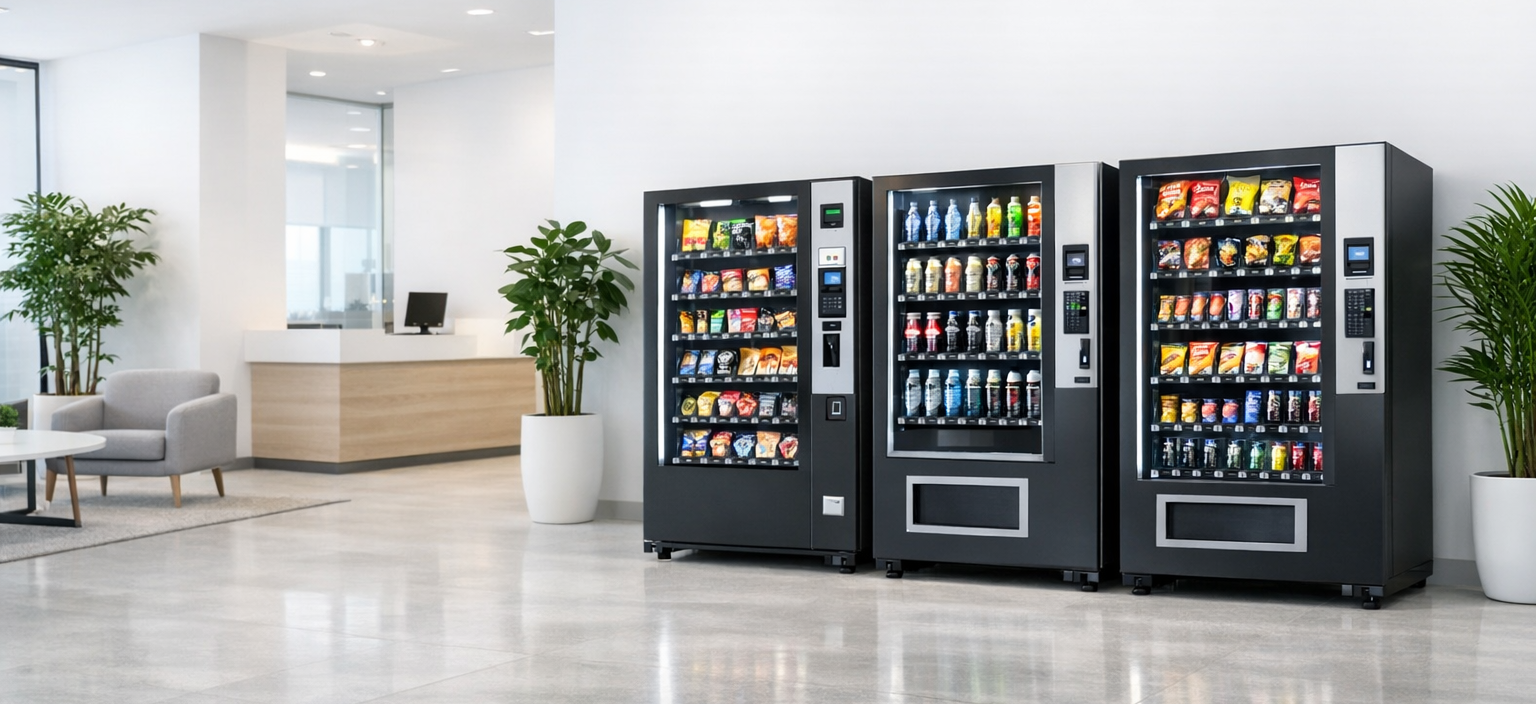
Office vending machines are the single biggest use case for vending in Australia. Predictable Monday-to-Friday demand, indoor environment, decent power and 4G, and a headcount that makes even a small smart fridge viable. In 2026 the office vending category has broadened well beyond the old 'snack tower plus coke machine' setup. This is the honest, current guide to what's available, what actually works in Australian offices, and how to get a machine installed at $0 cost to the workplace.
- Step 1
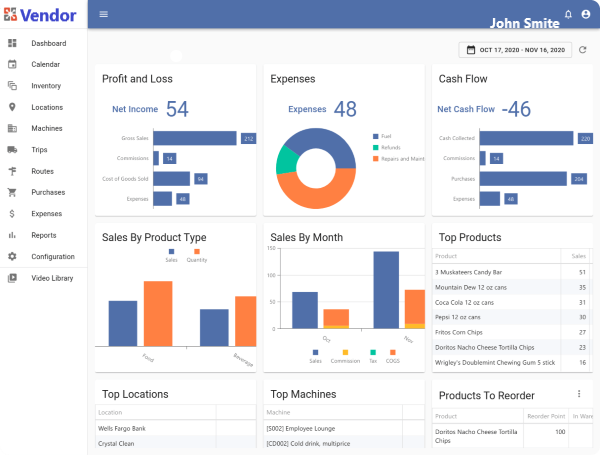
NFC/AI sensors detect the sale
Vision and weight sensors confirm every purchase on smart fridges and combos.
- Step 2
Telemetry uploads via 4G
Sales, stock and deck-temperature stream to the operator's dashboard.
- Step 3
Restock alert triggered
Par-level breach → the machine is added to the next optimised route.
- Step 4
Service visit dispatched
Filler arrives with a per-machine pick-list; office manager is not involved.
The five categories of office vending in Australia
- Snack vending machines — chips, chocolates, protein bars, biscuits. Spiral-delivery, ambient temperature.
- Drink vending machines — chilled cans and bottles. Bevmax-style glass front or older stack machines.
- Combination (combo) vending machines — snacks on top, drinks on the bottom, one footprint.
- Coffee vending machines — bean-to-cup, freshly ground per serve, hot chocolate and tea.
- Smart fridge vending machines — AI-monitored, cold-chain, chilled meals and fresh food.
Matching category to office size and style
The right category is a headcount and culture question, not a product-feature question. A 40-person office typically starts with a single combo machine — it's the highest revenue per square metre. A 100-person office usually splits into a snack + drink pair, or a combo plus a coffee machine. A 200+ person office typically runs a smart fridge for fresh food alongside snacks and drinks, plus a bean-to-cup coffee machine near the kitchen. Above 400 people you're into multi-machine banks in the lobby.
Smart fridges — the fastest-growing office category
Smart fridges are the fastest-growing office vending category in Australia, and the reason is straightforward: they turn a mid-morning snack machine into a legitimate on-site lunch option. Chicken wraps, sushi, salads, yoghurts, pre-packaged meals — all sold via tap-to-pay, all monitored for temperature and stock in real time. AI-driven restocking keeps the fridge fresh without any effort from the workplace.
Coffee vending machines in offices
Bean-to-cup coffee vending machines have replaced instant coffee tins in a big share of Australian offices in the last three years. They pull a real espresso shot per serve, take a 22L water tank if no plumbing is available, and vend flat whites, lattes, cappuccinos, long blacks, hot chocolate and tea. Nayax tap-to-pay is standard. See the full write-up in our free office coffee guide.
Combo machines — the office workhorse
For anyone starting from zero, a combo machine (snacks on top, drinks on the bottom) is the office workhorse. One power point, one footprint, one machine to service. Combos hit their stride in offices between 40 and 150 people, and they're the default we install on new sites where the site hasn't decided which direction to lean.
Install process — from request to live in 7–14 days
Australian office install typically runs on a two-week timeline. Day one you submit the site request. Inside one business day we confirm the site qualifies, then a site check is booked (in-person for larger jobs, photos for smaller ones) to confirm doorway width, floor loading and power. Delivery is scheduled inside 7–14 business days, machine is craned/trolleyed into position, connected to power, telemetry is activated, and the reader is paired to the payment gateway. The workplace is live-selling within a day of physical install.
Cost to the workplace: still $0
On the Free Vending Machines Australia program, cost to the office is $0 at every stage — delivery, install, machine, service, restocking, telemetry, food-safety monitoring on smart fridges, and removal at end of tenancy. No lease, no service invoice, no commission owed to the site, no purchase-order paperwork. Staff pay retail per item at the machine; the operator covers everything else through product margin.
CBD vs suburban offices
CBD offices tend to lean into smart fridges and coffee vending because staff aren't running out for lunch as often — the machine is competing with the ground-floor café. Suburban offices lean into combo and snack machines because there's usually less on-foot food nearby and the vending machine is a genuine amenity. Both are fine — the AI planner adjusts SKU mix and restock frequency either way.
Eligibility — what qualifies an office for a free machine
- 40+ regular staff (lower thresholds for coffee-only machines and specific industries).
- Indoor location with reasonable foot traffic — lobby, kitchen, breakout area.
- Standard 240V 10A power outlet within 1.5m of the machine footprint.
- Adequate 4G signal for telemetry (Wi-Fi is a bonus but rarely required).
- Accessible for delivery — standard trolley access, or crane access on upper floors.
Free quote
Request free office vending machines
Two-question pre-qualifier. If your office qualifies, we'll come back inside one business day with a written quote for a $0-cost install.
Next article
AI vending machine Australia — the benefits as an office vending machine
Fewer stock-outs, fresher fridge dates, better mix per floor — the honest office benefits of an AI vending machine in Australia.
Read next →Related service
See office vending
Snack, drink, combo, coffee and smart fridge for Australian offices — $0 to the site on eligible workplaces.
See service page →DavidB, VMA
Vending operator & technician
DavidB has 20+ years of hands-on experience across the Australian vending industry. He has configured, installed, removed and transported thousands of machines — from full site rollouts to the quick "pick-up-and-move" jobs that keep a site happy. Starting in repairs, he learned from some of the industry's longest-serving technicians, covering everything from lock changes and fridge decks to vend motors, control boards, coin mechs and note readers. He was also among the earliest installers of Australia's first telemetry systems, helping shape what operators actually need in the back end: product imaging, stock sales, re-ordering, route planning and even catching thieving fillers who did not know the machine was monitored. Later, he moved into supplier roles across note readers, coin acceptors, credit card readers and other cashless acceptance methods including QR code and RFID systems for specialised vending such as PPE machines.