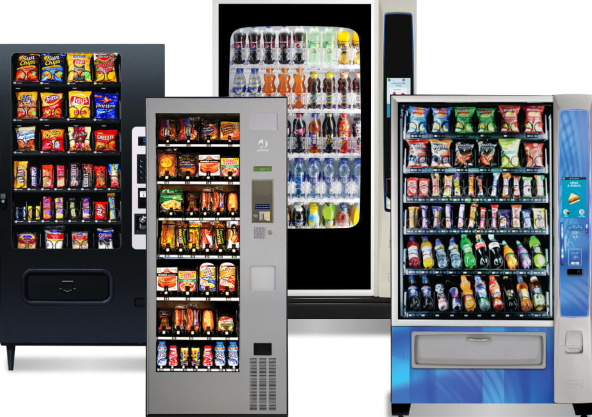
A major electrical manufacturing site in Tomago (Hunter region, NSW) ordered two combo vending machines for their new staff lunch room and outdoor covered area. Everything about the building was new — including the freshly laid turf, the mulched garden beds, and the paved paths that hadn't been signed off yet. The staff amenities were roughly 150 metres from the closest hardstand the truck could park on. There was no way we were driving a forklift or a delivery truck across that lawn.
The problem — new turf and no path
Two things you don't want to explain to a facility manager on install day: wheel ruts across the new lawn, and gouges in a garden bed. On this site the paved delivery path stopped 150 metres short of the lunch room. The alternative — a forklift across the grass — would have left twin tyre trenches the site would still be repairing months later.
The fix — pallet jack and rolling lexans
The crew used a manual pallet jack with the vending machine strapped to a heavy-duty pallet, and laid ground-protection panels ahead of the machine as they went. The panels were recycled front lexan sheets from old drink vending machines — thick polycarbonate, about a metre square, tough enough to spread the load across the turf without denting the soil underneath. Two panels down, roll the machine forward one panel length, leapfrog the rear panel to the front, repeat. It's slow but it doesn't leave a mark.
The outcome
Two crew, two hours, both machines in position at the lunch room and the outdoor covered area. The turf and garden beds looked exactly the way they did when we arrived. Site manager was happy. Staff had cold drinks and snacks by end of shift. This is the sort of install that never makes a case study but is the actual reason experienced operators earn their keep.
Why this matters for your site
If your workplace is a new build, a fit-out in progress, or a site with genuine landscaping constraints — polished concrete floors, epoxy warehouse coatings, freshly sealed carpark — mention it on the request form. There's almost always a way to land the machine without damage. It just needs to be planned before the truck leaves the depot, not solved on the driveway.
How we cross new turf, epoxy floors and heritage tiles without leaving a mark.
Next article
Moving a vending machine upstairs — what actually happens on site
Stair-climbers, tight landings, machines with the front door off. What a first-floor vending install really looks like — from the crew who do it.
Read next →Related service
Soft-landscaping & offsite-transport installs
Our service page for sites with new turf, polished concrete, epoxy floors and long carries from the truck — ground-protection method, timing, and coverage.
See service page →DavidB, VMA
Vending operator & technician
DavidB has 20+ years of hands-on experience across the Australian vending industry. He has configured, installed, removed and transported thousands of machines — from full site rollouts to the quick "pick-up-and-move" jobs that keep a site happy. Starting in repairs, he learned from some of the industry's longest-serving technicians, covering everything from lock changes and fridge decks to vend motors, control boards, coin mechs and note readers. He was also among the earliest installers of Australia's first telemetry systems, helping shape what operators actually need in the back end: product imaging, stock sales, re-ordering, route planning and even catching thieving fillers who did not know the machine was monitored. Later, he moved into supplier roles across note readers, coin acceptors, credit card readers and other cashless acceptance methods including QR code and RFID systems for specialised vending such as PPE machines.